Growing Parsnip: A Complete Profile
By Growing Home Greens Team · July 29, 2026
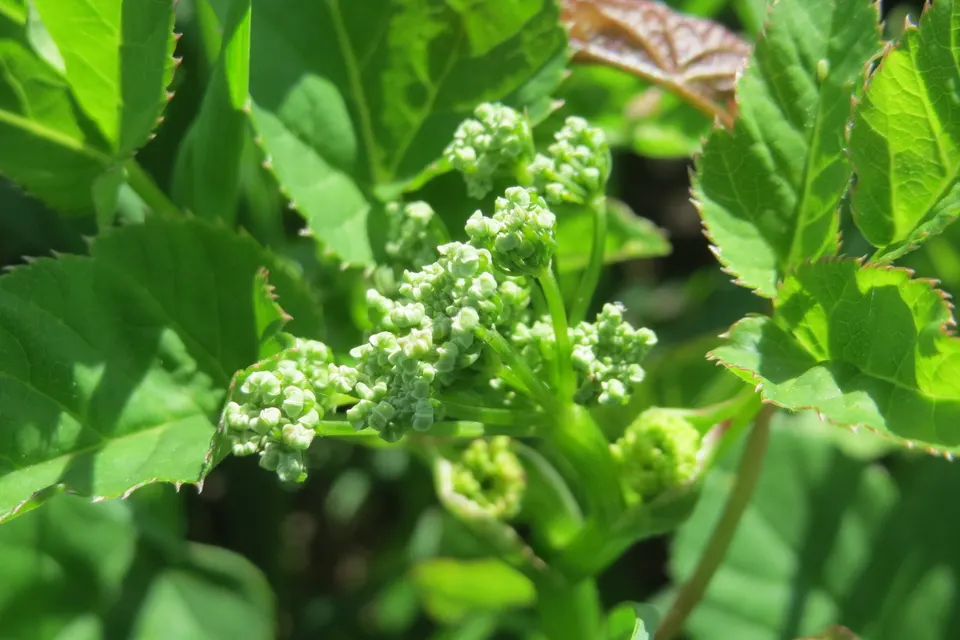
Parsnip looks like a pale carrot and grows much the same way, but it takes considerably longer in the ground and rewards leaving it there past the season’s first frost.
Sowing and the long wait
Direct-sow only. Parsnip’s long taproot dislikes disturbance, so transplants don’t work. Sow about 2 weeks before your last frost, a quarter to half inch deep. It’s a slow crop, taking about 110 days to maturity, and a light frost after that point improves the flavor by converting some of the root’s starches to sugar. Many gardeners deliberately leave parsnips in the ground until after the first hard frost rather than harvesting right at the 110-day mark, which is where a canker-resistant type like Javelin earns its keep: more time in the ground is more time for the disease to find a soft spot.
Forked roots and dead seed
Forked or stunted roots usually trace back to rocky, compacted, or recently-amended-with-fresh-manure soil. Parsnip wants deep, loose, stone-free soil to grow a long straight root, the same requirement carrots have. Parsnip seed also loses viability fast; use fresh seed each year rather than trusting a leftover packet from a prior season, since old parsnip seed germinates poorly.
A long, undisturbed occupant of one square
Parsnip has no well-established companion pairings, and nothing it needs to be kept away from. Given its long season and taproot, place it in the Garden Designer somewhere it can sit undisturbed from spring sowing through a fall or even early-winter harvest.
Sources: Javelin F1 Parsnip Seed, Johnny’s Selected Seeds.
Companion planting guide for Parsnip · Find your planting dates
Typically viable in USDA zones 2-9. Not sure your zone? Look it up by ZIP code.
Mature height: 1-1.5 ft
Method: Direct sow: Direct-sow outside. It doesn't transplant well, or doesn't need the extra time indoors.
When to plant parsnip, by zone
Every zone parsnip grows in. Pick your zone in the header and it will be highlighted here. Each zone links to its full page.
| Zone | Start indoors | Sow or plant out | Harvest |
|---|---|---|---|
| 2a & 2b | Not usually | May 6–May 13 | Aug 24–Aug 31 |
| 3a & 3b | Not usually | May 16–May 23 | Sep 3–Sep 10 |
| 4a & 4b | Not usually | May 1–May 8 | Aug 19–Aug 26 |
| 5a & 5b | Not usually | Apr 26–May 3 | Aug 14–Aug 21 |
| 6a & 6b | Not usually | Apr 11–Apr 18 | Jul 30–Aug 6 |
| 7a & 7b | Not usually | Mar 27–Apr 3 | Jul 15–Jul 22 |
| 8a & 8b | Not usually | Mar 11–Mar 18 | Jun 29–Jul 6 |
| 9a & 9b | Not usually | Feb 1–Feb 8 | May 22–May 29 |
Harvest dates are about 110 days after the sow or plant-out date.
Zone 2 sows before zone 3 here, which looks wrong and is not. USDA zones rank winter cold, not season length, and zone 2 is mostly interior Alaska, where hard winters come with warm summers. More on what a zone measures.
See exact start-indoors, direct-sow, and harvest dates for your zone →
How many Parsnip plants fit per square foot?
Spacing: 4 per square foot (square-foot-gardening spacing). Mature height: 1-1.5 ft.
Varieties worth considering
- Javelin F1 (Pastinaca sativa): Parsnip canker, a fungal disease that rots the shoulder of the root while it's still in the ground, is the crop's main letdown after all that patience. Johnny's Selected Seeds notes Javelin has strong field resistance to canker and holds its size in the ground longer than older open-pollinated types, which matters here since the whole strategy is leaving roots in past frost rather than pulling them on schedule. (source) Buy seeds: Botanical Interests
- Warrior F1: Johnny's describes large cylindrical roots with a slow taper that size up quickly, at about 105 days, but explicitly not recommended for overwintering since it can grow oversized. Choose this over Javelin if you want an early-to-mid-fall harvest rather than leaving roots in past frost. (source)
- Panorama F1 (Organic): A longer-season type at 120 days with long, slim, tapered roots, per Johnny's, and wide geographic adaptability the company specifically calls out for the Midwest and Northeast. The organic-certified option of the three, if that matters for your seed sourcing. (source) Buy seeds: High Mowing Organic Seeds
Why each variety is listed comes from the source shown next to it. We haven't grown these ourselves yet, so treat this as a research-backed starting point, not a personal endorsement. The buy links are separate from those sources: they go to seed suppliers that sell that exact variety, and we may earn a commission on some of them.
Where to buy parsnip seeds
Botanical Interests · True Leaf Market · Burpee (each supplier's parsnip seeds)
The varieties we recommend above each have their own buy links, for the suppliers that sell that exact variety.
As an Amazon Associate we earn from qualifying purchases. Some links on this page also go to other retailers we may earn a commission from as an affiliate, at no extra cost to you. We only recommend products with a clear consensus of positive, independent reviews, or ones we bought and use ourselves. Each item on our gear page says which.
See it growing
Search YouTube for "growing parsnip" videos → (a live search, not a hand-picked video; results vary and aren't vetted by us)

Pin this for later
Growing Parsnip: A long-season root crop that gets better after a frost. Patience through a long summer pays off in a sweeter fall harvest.
Save to Pinterest