Growing Mulberry: A Complete Profile
By Growing Home Greens Team · August 10, 2026
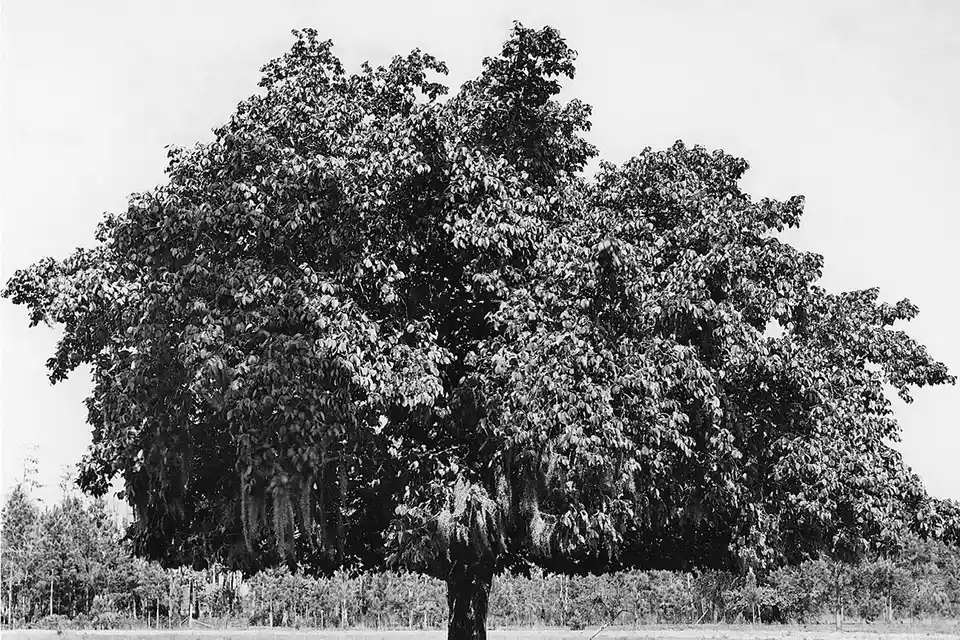
Mulberry is a large, fast-growing native shade tree that also happens to produce sweet, blackberry-like fruit, prized by birds and other wildlife as much as by the people who plant it.
A big tree, not a compact fruit bush
Red mulberry, the North American native form, grows to 40 feet tall, taller still in the northern part of its range, and needs to be planned for as a shade tree rather than a small orchard specimen. It thrives in infertile, sandy soil, is drought-tolerant once established, and handles wind reasonably well, in full sun to light shade. Some mulberry trees carry both male and female flowers on the same plant, while others need a separate male and female tree nearby to set fruit; check which type is being planted before assuming a single tree will produce.
Site it away from hardscaping
Fallen fruit stains whatever it lands on, so avoid planting directly over a driveway, sidewalk, or patio. Choosing a light-fruited cultivar cuts down on the mess if a spot near hardscaping is unavoidable.
Low-maintenance once established
Mulberry trees rarely need irrigation or fertilizer once established. Light pruning while young helps build a strong branch framework; on a mature tree, limit pruning to dead, damaged, or crossing wood, since large pruning wounds are slow to heal. The milky sap can irritate skin, so wear gloves when pruning.
Mulberry has no well-established companion pairings, and nothing it needs to be kept away from. Given its eventual size, it needs a large, permanent spot in the Garden Designer, away from paths and structures the fallen fruit would stain.
Source: Mulberry, University of Florida IFAS Gardening Solutions.
Companion planting guide for Mulberry · Find your planting dates
Typically viable in USDA zones 4-9. Not sure your zone? Look it up by ZIP code.
Mature height: 10-20 ft
Method: Buy as a start: Buy as a nursery start and transplant outside. It's slow or unreliable from seed, so most gardeners skip seed-starting it entirely.
When to plant mulberry, by zone
Every zone mulberry grows in. Pick your zone in the header and it will be highlighted here. Each zone links to its full page.
| Zone | Start indoors | Sow or plant out | Harvest |
|---|---|---|---|
| 4a & 4b | Buy as a start | May 15–May 22 | First real harvest in year 4 |
| 5a & 5b | Buy as a start | May 10–May 17 | First real harvest in year 4 |
| 6a & 6b | Buy as a start | Apr 25–May 2 | First real harvest in year 4 |
| 7a & 7b | Buy as a start | Apr 10–Apr 17 | First real harvest in year 4 |
| 8a & 8b | Buy as a start | Mar 25–Apr 1 | First real harvest in year 4 |
| 9a & 9b | Buy as a start | Feb 15–Feb 22 | First real harvest in year 4 |
See exact start-indoors, direct-sow, and harvest dates for your zone →
How many Mulberry plants fit per square foot?
Spacing: about 50 square feet per plant (square-foot-gardening spacing). Mature height: 10-20 ft.
Varieties worth considering
- 'Tehama' mulberry: University of Florida IFAS Gardening Solutions recommends this as a light-fruited cultivar for gardeners who want to cut down on the mess of fallen fruit staining nearby surfaces. (source)
Why each variety is listed comes from the source shown next to it. We haven't grown these ourselves yet, so treat this as a research-backed starting point, not a personal endorsement. The buy links are separate from those sources: they go to seed suppliers that sell that exact variety, and we may earn a commission on some of them.
Where to buy mulberry starts
Mulberry is almost always bought as a nursery start rather than seeded. Check a local nursery or garden center; we haven't vetted online start/plant suppliers yet.
As an Amazon Associate we earn from qualifying purchases. Some links on this page also go to other retailers we may earn a commission from as an affiliate, at no extra cost to you. We only recommend products with a clear consensus of positive, independent reviews, or ones we bought and use ourselves. Each item on our gear page says which.
See it growing
Search YouTube for "growing mulberry" videos → (a live search, not a hand-picked video; results vary and aren't vetted by us)

Pin this for later
Growing Mulberry: A large, fast-growing native shade tree that also happens to produce sweet, blackberry-like fruit, popular with birds and wildlife as much as with people.
Save to Pinterest