Growing Moonflower: A Complete Profile
By Growing Home Greens Team · July 18, 2026
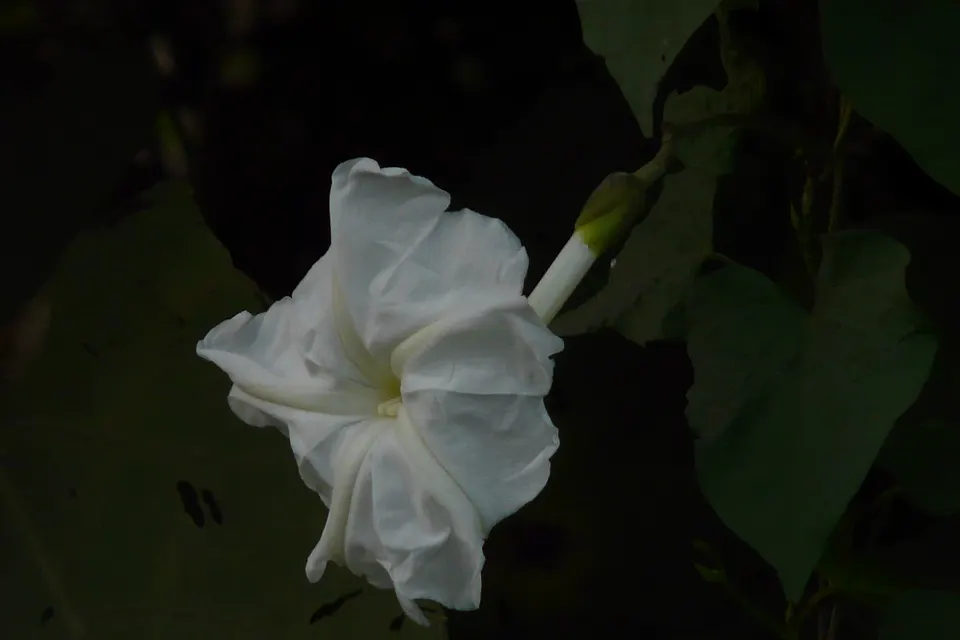
Moonflower is a morning glory that runs on the opposite schedule. The flowers, white trumpets six inches across, open in the late afternoon and close at dawn, and they’re scented for a pollinator most gardeners never see: hawkmoths and sphinx moths, working the plant after dark. If you sit outside on a summer evening you can sometimes watch a bud unwind in a couple of minutes.
It’s a serious climber. NC State puts it at 10 to 30 feet, spreading 3 to 6 feet.
Getting the seed to come up
This is where most moonflower attempts fail, and it isn’t the seed’s fault.
The seed coat is hard and water can’t get through it. Sow it dry and straight from the packet and you’ll get poor germination, sometimes almost none. Two things fix it, and you want both: nick the coat with a file or a bit of fine sandpaper, then soak the seed in warm water overnight before it goes in.
Prepared that way it germinates in one to three weeks. Start it four to six weeks before your last frost, or direct-sow around frost date once the soil is warm.
Put the trellis up before you plant. This vine climbs whatever it reaches first and it is not gentle about letting go.
Plant two per square foot at the base of its support. It’s a tender perennial, hardy only in zones 10a-12b, so almost everyone grows it as an annual. You can lift one into a container and overwinter it indoors if you want a head start next year.
Two things that are worth being clear about
“Moonflower” also means Datura, and Datura is dangerous. Datura is an upright bushy plant in the nightshade family with similar large white trumpet flowers, and every part of it is extremely toxic. People do confuse them. If you’re buying seed or accepting it from a neighbour, check that it says Ipomoea alba. If the plant is a shrubby thing standing on its own rather than a vine that climbs, it isn’t moonflower.
Ipomoea alba’s own seeds are mildly toxic too. They contain indole alkaloids; NC State rates the risk to people as low severity, with vomiting and, in quantity, hallucinations. It’s also listed as toxic to dogs, cats and horses. It’s a plant to grow up a fence, not one to plant where a toddler is grazing.
What else goes wrong
No flowers by midsummer. Almost always just time and heat. This is a plant that puts on a lot of vine before it puts on any flowers, and a cool July delays it. It usually gets going properly in late summer and runs until frost.
All leaves, no buds. Too much nitrogen, or too little sun. It wants full sun and fairly ordinary soil; a rich bed gives you a spectacular green curtain and nothing to look at in the evening.
Where to put it
Against a fence, arbour or porch rail, on the side of the house you sit on after dark. The whole point of this plant is the hour around sunset, and a moonflower on the far fence is a moonflower nobody sees.
It has no documented companion pairings or conflicts. Plan its trellis position in the Garden Designer rather than letting it find its own.
Source: Ipomoea alba, NC State Extension Gardener Plant Toolbox.
Companion planting guide for Moonflower · Find your planting dates
Typically viable in USDA zones 2-11. Not sure your zone? Look it up by ZIP code.
Mature height: 10-20 ft
Method: Either: Start indoors for an earlier harvest, or direct-sow outside for less fuss. Either works.
When to plant moonflower, by zone
Every zone moonflower grows in. Pick your zone in the header and it will be highlighted here. Each zone links to its full page.
| Zone | Start indoors | Sow or plant out | Bloom |
|---|---|---|---|
| 2a & 2b | Apr 15–Apr 22 | May 20–May 27 | Aug 18–Aug 25 |
| 3a & 3b | Apr 25–May 2 | May 30–Jun 6 | Aug 28–Sep 4 |
| 4a & 4b | Apr 10–Apr 17 | May 15–May 22 | Aug 13–Aug 20 |
| 5a & 5b | Apr 5–Apr 12 | May 10–May 17 | Aug 8–Aug 15 |
| 6a & 6b | Mar 21–Mar 28 | Apr 25–May 2 | Jul 24–Jul 31 |
| 7a & 7b | Mar 6–Mar 13 | Apr 10–Apr 17 | Jul 9–Jul 16 |
| 8a & 8b | Feb 18–Feb 25 | Mar 25–Apr 1 | Jun 23–Jun 30 |
| 9a & 9b | Jan 11–Jan 18 | Feb 15–Feb 22 | May 16–May 23 |
| 10a & 10b | Dec 26–Jan 2 | Jan 30–Feb 6 | Apr 30–May 7 |
| 11a & 11b | Nov 27–Dec 4 | Jan 1–Jan 8 | Apr 1–Apr 8 |
Bloom dates are about 90 days after the sow or plant-out date, not after starting seeds indoors.
Zone 2 sows before zone 3 here, which looks wrong and is not. USDA zones rank winter cold, not season length, and zone 2 is mostly interior Alaska, where hard winters come with warm summers. More on what a zone measures.
See exact start-indoors, direct-sow, and harvest dates for your zone →
How many Moonflower plants fit per square foot?
Spacing: 2 per square foot (square-foot-gardening spacing). Mature height: 10-20 ft.
Varieties worth considering
- Ipomoea alba, the species itself: There is essentially no named-cultivar market here: you buy the species. What matters is checking the botanical name on the packet, because 'moonflower' is also used for Datura, which is a different plant entirely and a dangerous one. (source)
- 'Giant White': One of the two named selections NC State Extension's own plant toolbox lists for this species, sold widely under this name for its larger-than-species blooms. Since there's little to separate named selections agronomically, this is mostly about buying from a supplier who has bothered to select for flower size. (source) Buy seeds: Burpee
- 'Belle de Nuit': The other named selection on NC State's list, French for "beautiful of the night", which is either a fitting name or a marketing one depending how charitable you're feeling. Functionally the same plant as the species and Giant White. (source)
Why each variety is listed comes from the source shown next to it. We haven't grown these ourselves yet, so treat this as a research-backed starting point, not a personal endorsement. The buy links are separate from those sources: they go to seed suppliers that sell that exact variety, and we may earn a commission on some of them.
Where to buy moonflower seeds
Botanical Interests · True Leaf Market · Burpee (each supplier's moonflower seeds)
The varieties we recommend above each have their own buy links, for the suppliers that sell that exact variety.
As an Amazon Associate we earn from qualifying purchases. Some links on this page also go to other retailers we may earn a commission from as an affiliate, at no extra cost to you. We only recommend products with a clear consensus of positive, independent reviews, or ones we bought and use ourselves. Each item on our gear page says which.
See it growing
Search YouTube for "growing moonflower" videos → (a live search, not a hand-picked video; results vary and aren't vetted by us)

Pin this for later
Growing Moonflower: Moonflower opens at dusk, closes at dawn, and is pollinated by hawkmoths. How to get the hard seed to germinate, and how to tell it from the poisonous plant it shares a name with.
Save to Pinterest