Growing Lingonberry: A Complete Profile
By Growing Home Greens Team · August 10, 2026
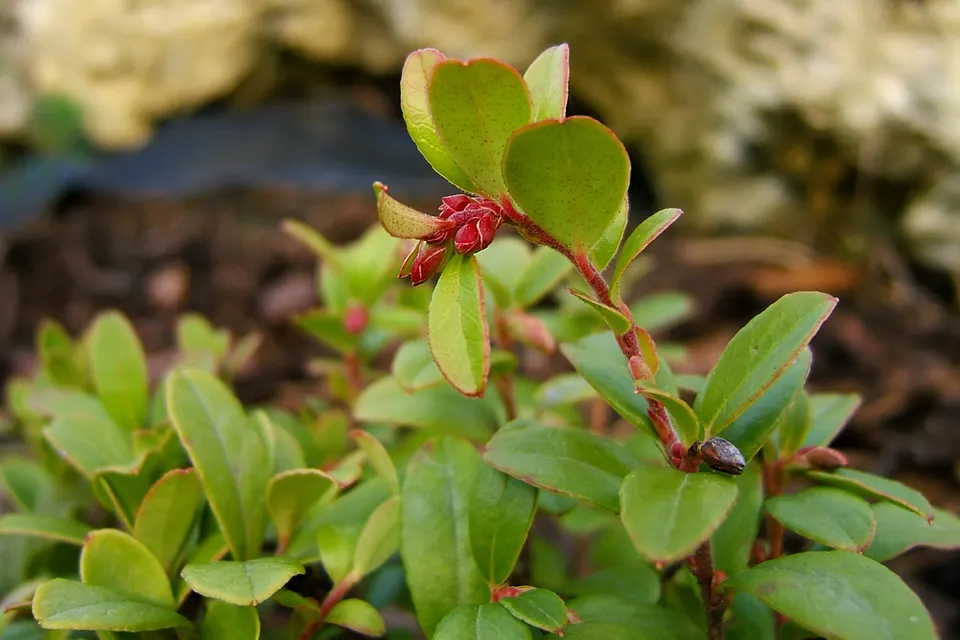
Lingonberry is a low, spreading evergreen groundcover-scale berry, closely related to blueberry and cranberry, with a tart flavor most people know from Scandinavian jam rather than fresh eating.
Soil and salt sensitivity
Lingonberries need light, well-drained soil, a sandy, silty, or well-drained loam, with a soil pH between 4.3 and 5.5. They’re sensitive to salt, especially sodium and chloride, more so than most fruit here, so test irrigation water if salt content is a concern in the area.
A pollinizer variety is not optional
This plant needs a second, compatible pollinizer variety nearby to size up its berries; a bed planted entirely in one high-yielding cultivar noticeably underperforms. Growers plant roughly 10 percent of a bed in a lower-yielding pollinizer cultivar like Red Pearl or Sussi to support the main variety. Space plants 8 to 18 inches apart within a row, with bed centers 24 to 36 inches apart.
Slow to establish, then decades of fruit
No pruning is recommended for the first 4 to 5 years. Plants spread by underground rhizomes and fully cover a bed by year four or five, more like a groundcover than a typical berry bush. There are two bloom periods, spring and midsummer, which can produce two separate harvests, one in mid-August and one in mid-October. A healthy planting stays productive for 20 years or more.
Lingonberry has no well-established companion pairings, and nothing it needs to be kept away from. At 1 plant per square foot, it works well as a low, evergreen edging or groundcover berry in the Garden Designer, given its genuine cold hardiness.
Source: Lingonberry production guide for the Pacific Northwest, Oregon State University Extension.
Companion planting guide for Lingonberry · Find your planting dates
Typically viable in USDA zones 3-7. Not sure your zone? Look it up by ZIP code.
Mature height: 0.5-1.5 ft
Method: Buy as a start: Buy as a nursery start and transplant outside. It's slow or unreliable from seed, so most gardeners skip seed-starting it entirely.
When to plant lingonberry, by zone
Every zone lingonberry grows in. Pick your zone in the header and it will be highlighted here. Each zone links to its full page.
| Zone | Start indoors | Sow or plant out | Harvest |
|---|---|---|---|
| 3a & 3b | Buy as a start | May 16–May 23 | First real harvest in year 3 |
| 4a & 4b | Buy as a start | May 1–May 8 | First real harvest in year 3 |
| 5a & 5b | Buy as a start | Apr 26–May 3 | First real harvest in year 3 |
| 6a & 6b | Buy as a start | Apr 11–Apr 18 | First real harvest in year 3 |
| 7a & 7b | Buy as a start | Mar 27–Apr 3 | First real harvest in year 3 |
See exact start-indoors, direct-sow, and harvest dates for your zone →
How many Lingonberry plants fit per square foot?
Spacing: 1 per square foot (square-foot-gardening spacing). Mature height: 0.5-1.5 ft.
Varieties worth considering
- 'Red Pearl' lingonberry: Oregon State University Extension identifies this as one of the two most commonly used pollinizer cultivars, needed to size up the berries of a higher-yielding main variety planted alongside it. (source)
Why each variety is listed comes from the source shown next to it. We haven't grown these ourselves yet, so treat this as a research-backed starting point, not a personal endorsement. The buy links are separate from those sources: they go to seed suppliers that sell that exact variety, and we may earn a commission on some of them.
Where to buy lingonberry starts
Lingonberry is almost always bought as a nursery start rather than seeded. Check a local nursery or garden center; we haven't vetted online start/plant suppliers yet.
As an Amazon Associate we earn from qualifying purchases. Some links on this page also go to other retailers we may earn a commission from as an affiliate, at no extra cost to you. We only recommend products with a clear consensus of positive, independent reviews, or ones we bought and use ourselves. Each item on our gear page says which.
See it growing
Search YouTube for "growing lingonberry" videos → (a live search, not a hand-picked video; results vary and aren't vetted by us)

Pin this for later
Growing Lingonberry: A low, spreading evergreen groundcover-scale berry, closely related to blueberry and cranberry, with a tart flavor most people know from Scandinavian jam.
Save to Pinterest