Growing Larkspur: A Complete Profile
By Growing Home Greens Team · July 18, 2026
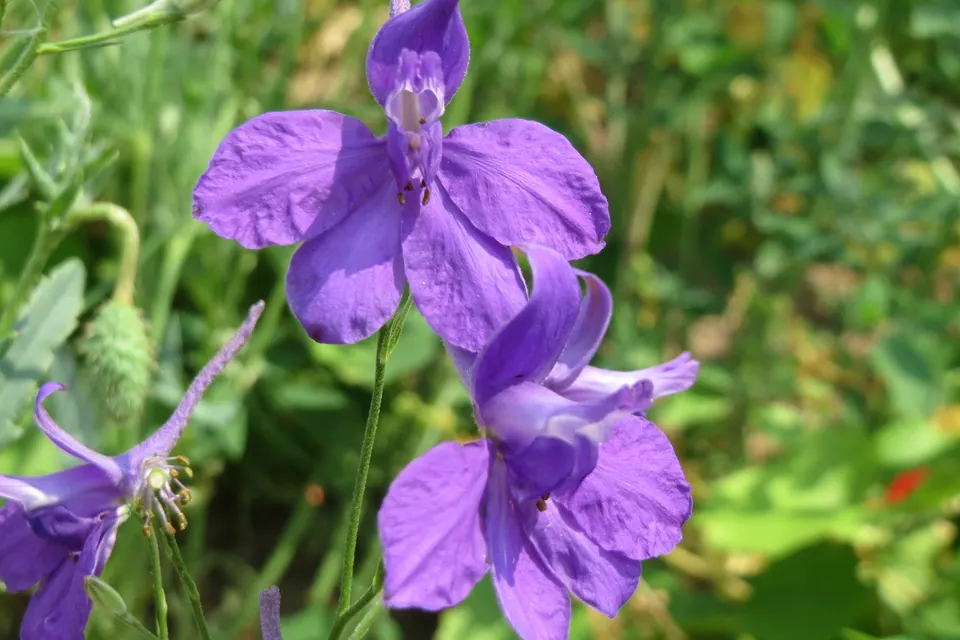
Larkspur is one of the few flowers on this site that flatly refuses to be transplanted. It has to be direct-sown, and the seed won’t germinate at all unless it’s cold and kept dark, which puts it on the opposite schedule from most annuals people start indoors under lights. Get the timing right and it rewards you with tall, dense spires of bloom; get it wrong and the seed just sits in the ground doing nothing.
Cold, dark seed that refuses to transplant
Direct-sow larkspur about 4 weeks before your last frost, pressing seed a quarter-inch deep and keeping it dark. It needs both cold and darkness to break dormancy, and soil that’s already warmed past the mid-50s won’t trigger germination well. This is a tall plant, so give it a spot where it won’t shade out shorter vegetables, and be ready to stake it if your garden is exposed to wind. It’s not well suited to hot-summer low-desert planting, since it wants a stretch of cool weather to establish before heat arrives. Plant 1 per square foot.
No germination is a condition problem, not a bad batch
Seed that never comes up is almost always a germination-condition problem, not a bad batch: soil that’s too warm or seed that got covered too shallow (letting light in) or too deep (blocking it from ever sensing the cold-dark cue) are the usual culprits. Floppy, leaning stalks in an exposed bed are a wind problem more than a nutrition one; staking early prevents the stems from kinking permanently.
A tall backdrop for the north side
Larkspur has no well-established companion pairings, and nothing it needs to be kept away from. Its height makes it a natural backdrop plant, so place it along the north side of a bed in the Garden Designer where it won’t cast shade on lower vegetables during the day.
Companion planting guide for Larkspur · Find your planting dates
Typically viable in USDA zones 2-10. Not sure your zone? Look it up by ZIP code.
Mature height: 3-4 ft
Method: Direct sow: Direct-sow outside. It doesn't transplant well, or doesn't need the extra time indoors.
When to plant larkspur, by zone
Every zone larkspur grows in. Pick your zone in the header and it will be highlighted here. Each zone links to its full page.
| Zone | Start indoors | Sow or plant out | Bloom |
|---|---|---|---|
| 2a & 2b | Not usually | Apr 22–Apr 29 | Jul 26–Aug 2 |
| 3a & 3b | Not usually | May 2–May 9 | Aug 5–Aug 12 |
| 4a & 4b | Not usually | Apr 17–Apr 24 | Jul 21–Jul 28 |
| 5a & 5b | Not usually | Apr 12–Apr 19 | Jul 16–Jul 23 |
| 6a & 6b | Not usually | Mar 28–Apr 4 | Jul 1–Jul 8 |
| 7a & 7b | Not usually | Mar 13–Mar 20 | Jun 16–Jun 23 |
| 8a & 8b | Not usually | Feb 25–Mar 4 | May 31–Jun 7 |
| 9a & 9b | Not usually | Jan 18–Jan 25 | Apr 23–Apr 30 |
| 10a & 10bFall window | Not usually | Sep–Jan | ~95 days after direct-sowing |
Bloom dates are about 95 days after the sow or plant-out date.
Zone 2 sows before zone 3 here, which looks wrong and is not. USDA zones rank winter cold, not season length, and zone 2 is mostly interior Alaska, where hard winters come with warm summers. More on what a zone measures.
See exact start-indoors, direct-sow, and harvest dates for your zone →
How many Larkspur plants fit per square foot?
Spacing: 1 per square foot (square-foot-gardening spacing). Mature height: 3-4 ft.
Varieties worth considering
- QIS Larkspur Formula Mix: Johnny's Selected Seeds sells this as an excellent cut-flower series, with dense flower spikes 9-12 inches long on 36-48 inch plants, a good choice if you want larkspur specifically for cutting rather than as a filler bloom. (source)
- Misty Lavender: Johnny's describes pearly gray-lavender blooms, identical in their trials to the heirloom 'Earl Grey', on the same 9-12 inch flower spikes as QIS. A distinct color if the standard QIS mix's blues and pinks aren't what you're after. (source) Buy seeds: Botanical Interests
- Pink Queen: A pale pink larkspur with hints of pale green, per Johnny's, on the same 9-12 inch spikes. Bred for fresh and dried cut-flower use like Misty Lavender, just in a softer color. (source)
Why each variety is listed comes from the source shown next to it. We haven't grown these ourselves yet, so treat this as a research-backed starting point, not a personal endorsement. The buy links are separate from those sources: they go to seed suppliers that sell that exact variety, and we may earn a commission on some of them.
Where to buy larkspur seeds
Botanical Interests · True Leaf Market · High Mowing Organic Seeds (each supplier's larkspur seeds)
The varieties we recommend above each have their own buy links, for the suppliers that sell that exact variety.
As an Amazon Associate we earn from qualifying purchases. Some links on this page also go to other retailers we may earn a commission from as an affiliate, at no extra cost to you. We only recommend products with a clear consensus of positive, independent reviews, or ones we bought and use ourselves. Each item on our gear page says which.
See it growing
Search YouTube for "growing larkspur" videos → (a live search, not a hand-picked video; results vary and aren't vetted by us)

Pin this for later
Growing Larkspur: A tall, direct-sow-only cottage flower that needs cold, dark soil to germinate, and won't forgive being started in trays.
Save to Pinterest