Growing Lantana: A Complete Profile
By Growing Home Greens Team · July 18, 2026
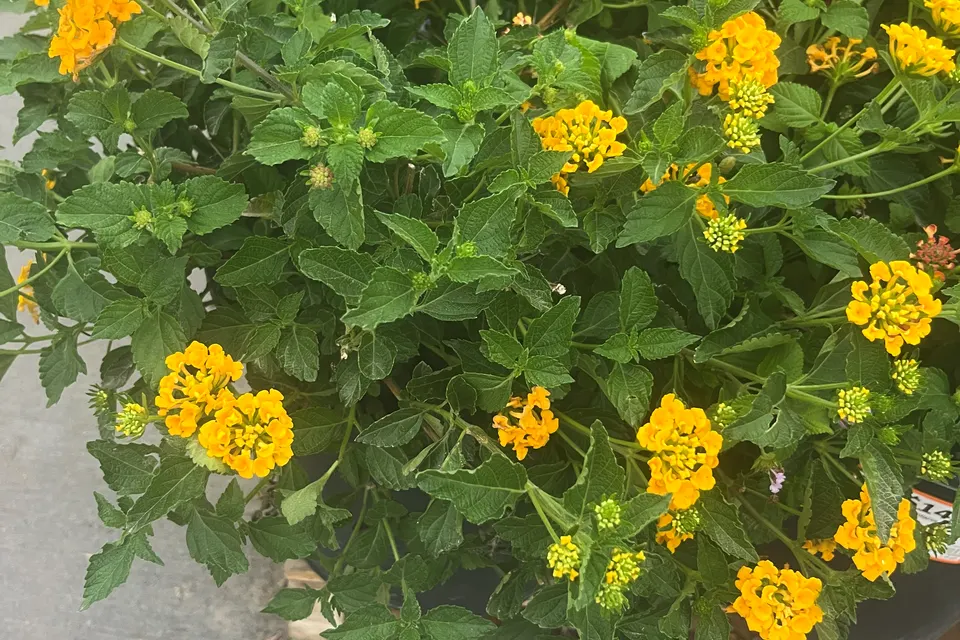
Lantana is a sprawling, heat-tolerant bloomer that only really makes sense in warm zones (8-11), and worth a second look at which specific cultivar you’re buying, since ordinary Lantana camara has a documented invasive track record in mild climates. The flowers come in small, tight clusters that open one color and fade to another, yellow shading to orange or pink fading to white, giving a 2- to 3-foot spreading mound its multicolor look.
Budgeting for a nursery start, not seed
Lantana is essentially nursery-start only in a home garden: seed germination is slow and erratic enough that starting it yourself from seed isn’t practical, so budget for buying transplants instead. Start those transplants indoors about 10 weeks before your last frost if you’re growing your own from purchased plugs, or set nursery starts out about 2 weeks after that date. It reaches flowering size in around 90 days and needs room, its mounding, trailing habit spreads about 3 feet wide, but it’s budgeted at only 0.15 plants per square foot (roughly 7 square feet per plant) to account for that spread. It’s a true perennial hardy to about 28°F, but grown as an annual outside zones 8-11.
Weak flowering is a sun problem
Leggy, sparse plants with weak flowering are usually a sun problem. Lantana wants full, hot sun and underperforms in shade or in cooler climates outside its comfort zone. In warm-winter regions, an unchecked planting can seed itself into surrounding wild areas; if that’s a concern where you garden, a sterile cultivar sidesteps the issue without giving up the flower.
A long-season butterfly draw that needs its own space
Lantana’s clustered flowers are a strong, long-season draw for butterflies and other pollinators working the vegetable beds nearby. See the full companion guide for lantana. Its wide sprawl means it needs dedicated room in the Garden Designer rather than being squeezed in as a border accent. Plan for its mature spread, not its transplant size.
Companion planting guide for Lantana · Find your planting dates
Typically viable in USDA zones 3-11. Not sure your zone? Look it up by ZIP code.
Mature height: 1-2 ft
Method: Buy as a start: Buy as a nursery start and transplant outside. It's slow or unreliable from seed, so most gardeners skip seed-starting it entirely.
When to plant lantana, by zone
Every zone lantana grows in. Pick your zone in the header and it will be highlighted here. Each zone links to its full page.
| Zone | Start indoors | Sow or plant out | Bloom |
|---|---|---|---|
| 3a & 3b | Buy as a start | Jun 13–Jun 20 | Sep 11–Sep 18 |
| 4a & 4b | Buy as a start | May 29–Jun 5 | Aug 27–Sep 3 |
| 5a & 5b | Buy as a start | May 24–May 31 | Aug 22–Aug 29 |
| 6a & 6b | Buy as a start | May 9–May 16 | Aug 7–Aug 14 |
| 7a & 7b | Buy as a start | Apr 24–May 1 | Jul 23–Jul 30 |
| 8a & 8b | Buy as a start | Apr 8–Apr 15 | Jul 7–Jul 14 |
| 9a & 9b | Buy as a start | Mar 1–Mar 8 | May 30–Jun 6 |
| 10a & 10b | Buy as a start | Feb 13–Feb 20 | May 14–May 21 |
| 11a & 11b | Buy as a start | Jan 15–Jan 22 | Apr 15–Apr 22 |
Bloom dates are about 90 days after the sow or plant-out date.
See exact start-indoors, direct-sow, and harvest dates for your zone →
How many Lantana plants fit per square foot?
Spacing: about 7 square feet per plant (square-foot-gardening spacing). Mature height: 1-2 ft.
Varieties worth considering
- 'Bloomify' series (e.g. 'Bloomify Red', 'Bloomify Rose'): UF/IFAS Gardening Solutions recommends sterile Lantana camara cultivars like the 'Bloomify' series over invasive seed-producing types, noting sterile varieties put more energy into flowering since they aren't spending it on seed production, a meaningfully different pick for zone 8-11 gardeners, since ordinary lantana is a documented invasive in warm climates. (source)
- 'New Gold': Clemson HGIC describes this as sterile and heavy-blooming with deep gold flowers, on a smaller 2 foot tall by 4 foot wide habit than Miss Huff below. Reliably hardy on the coast per Clemson, but a milder-winter pick than Miss Huff for colder parts of its range. (source)
- 'Miss Huff': Also sterile per Clemson, but a much larger plant, 5-6 feet in a single season, in a mix of orange, coral and gold. Clemson calls it one of the most reliably perennial lantanas even in the cooler Upstate, the pick if winter hardiness matters more than a compact size. (source)
Why each variety is listed comes from the source shown next to it. We haven't grown these ourselves yet, so treat this as a research-backed starting point, not a personal endorsement. The buy links are separate from those sources: they go to seed suppliers that sell that exact variety, and we may earn a commission on some of them.
Where to buy lantana starts
Lantana is almost always bought as a nursery start rather than seeded. Check a local nursery or garden center; we haven't vetted online start/plant suppliers yet.
As an Amazon Associate we earn from qualifying purchases. Some links on this page also go to other retailers we may earn a commission from as an affiliate, at no extra cost to you. We only recommend products with a clear consensus of positive, independent reviews, or ones we bought and use ourselves. Each item on our gear page says which.
See it growing
Search YouTube for "growing lantana" videos → (a live search, not a hand-picked video; results vary and aren't vetted by us)

Pin this for later
Growing Lantana: A heat-loving, nursery-start-only bloomer worth choosing a sterile cultivar of if you garden where it can escape into the wild.
Save to Pinterest