Growing Hyacinth: A Complete Profile
By Growing Home Greens Team · July 18, 2026
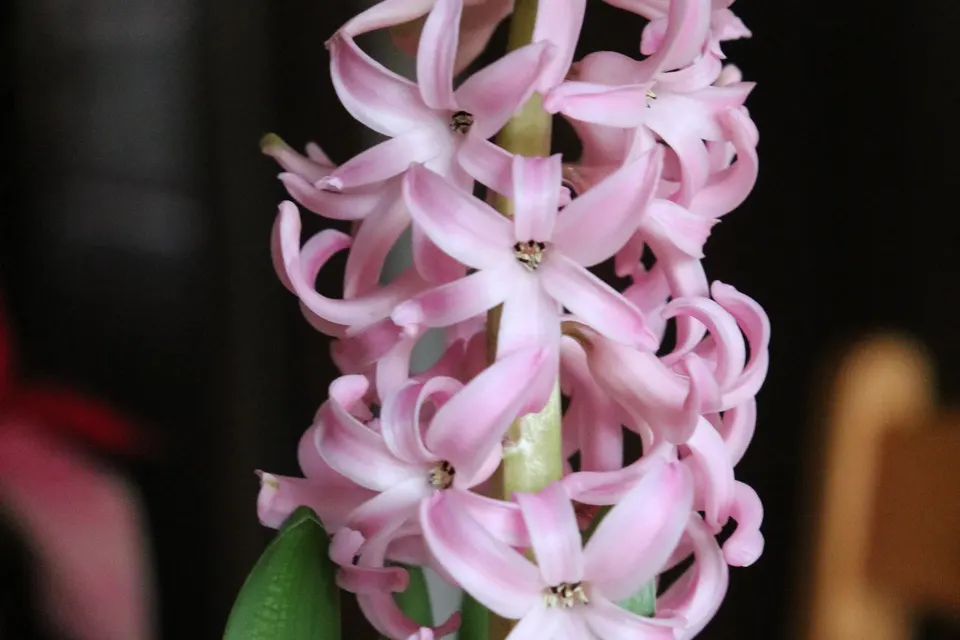
Hyacinth is planted alongside tulips and daffodils in fall, but it earns its spot for a different reason, the dense, 8- to 10-inch spike of small waxy blooms (blue, pink, purple, or white) carries a fragrance strong enough to fill an entire porch or entryway, which is why it shows up so often near doors and walkways rather than out in a bed.
Planting the bulbs
Plant bulbs in fall, timed to your zone, and no special chilling is needed anywhere in zones 4-8, the ground gets cold enough on its own. That’s a difference from some other fall bulbs (tulips in the warmest zones, for instance) that need help getting a cold period. Bloom is shorter-lived than daffodils or tulips, typically just a couple of weeks, but the scent carries well beyond the plant itself, which is the main reason people grow it.
Why the spikes get smaller
Flower spikes that come up small or sparse in later years are a normal pattern for hyacinth, unlike daffodils, hyacinth tends to produce its biggest, showiest spike the first spring after planting and settles into smaller, looser spikes in subsequent years as the bulb divides. That’s not a sign of disease, just how the bulb behaves; some gardeners replant fresh bulbs every couple of years for the fullest display rather than fighting it. Bulbs that rot are almost always a drainage problem, like other spring bulbs, hyacinth needs to stay dry through summer dormancy.
Placing it where you’ll notice it
Hyacinth’s short but intense bloom window makes it a good match for spots you walk past daily, since the fragrance is the point. See the full companion guide for hyacinth for what pairs well nearby. At roughly 5 per square foot, it plans into the Garden Designer similarly to daffodils; place it somewhere you’ll notice the smell rather than at the back of a bed.
Sources: Hyacinthus orientalis, NC State Extension Gardener Plant Toolbox.
Companion planting guide for Hyacinth · Find your planting dates
Typically viable in USDA zones 4-8. Not sure your zone? Look it up by ZIP code.
Mature height: 0.5-1 ft
Method: Direct sow: Direct-sow outside. It doesn't transplant well, or doesn't need the extra time indoors.
When to plant hyacinth, by zone
Every zone hyacinth grows in. Pick your zone in the header and it will be highlighted here. Each zone links to its full page.
| Zone | Start indoors | Sow or plant out | Bloom |
|---|---|---|---|
| 4a & 4bFall window | Not usually | Sep–Nov | ~150 days after direct-sowing |
| 5a & 5bFall window | Not usually | Sep–Nov | ~150 days after direct-sowing |
| 6a & 6bFall window | Not usually | Sep–Nov | ~150 days after direct-sowing |
| 7a & 7bFall window | Not usually | Sep–Nov | ~150 days after direct-sowing |
| 8a & 8bFall window | Not usually | Sep–Nov | ~150 days after direct-sowing |
Bloom dates are about 150 days after the sow or plant-out date.
See exact start-indoors, direct-sow, and harvest dates for your zone →
How many Hyacinth plants fit per square foot?
Spacing: 5 per square foot (square-foot-gardening spacing). Mature height: 0.5-1 ft.
Varieties worth considering
- 'Blue Jacket': Listed by NC State Extension's Plant Toolbox for its navy-blue flowers, a dependable, widely available cultivar if you want the classic hyacinth color rather than gambling on an unnamed mixed-color bag of bulbs. (source)
- 'Woodstock': Longfield Gardens lists 'Woodstock' with deep purple-burgundy flowers, a darker, more dramatic color than Blue Jacket's navy blue. Often sold and planted alongside 'City of Haarlem' for a deliberate color contrast in the same bed. (source)
- 'City of Haarlem': The creamy yellow counterpart to Woodstock's deep purple, per Longfield Gardens, useful if you want hyacinth's color range beyond blue and purple. A widely available cultivar rather than a rare specialty bulb. (source)
Why each variety is listed comes from the source shown next to it. We haven't grown these ourselves yet, so treat this as a research-backed starting point, not a personal endorsement. The buy links are separate from those sources: they go to seed suppliers that sell that exact variety, and we may earn a commission on some of them.
Where to buy hyacinth bulbs
We haven't vetted bulb/tuber suppliers yet. Our seed-supplier list doesn't carry these.
As an Amazon Associate we earn from qualifying purchases. Some links on this page also go to other retailers we may earn a commission from as an affiliate, at no extra cost to you. We only recommend products with a clear consensus of positive, independent reviews, or ones we bought and use ourselves. Each item on our gear page says which.
See it growing
Search YouTube for "growing hyacinth" videos → (a live search, not a hand-picked video; results vary and aren't vetted by us)

Pin this for later
Growing Hyacinth: A fall-planted bulb grown as much for its heavy, unmistakable fragrance as for the flower spike itself.
Save to Pinterest