Growing Honeyberry (Haskap): A Complete Profile
By Growing Home Greens Team · August 10, 2026
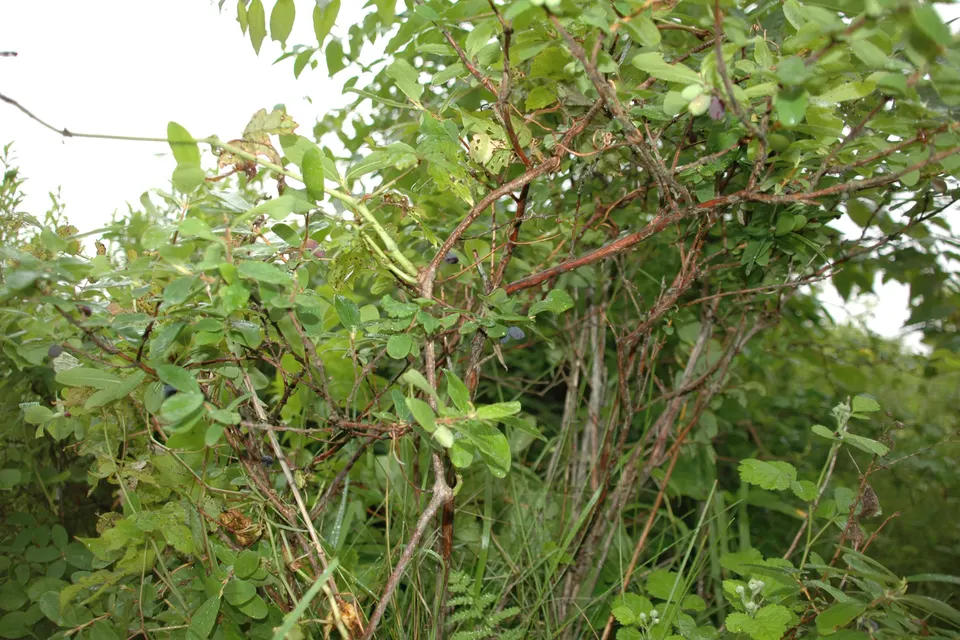
Honeyberry, also called haskap, is one of the most cold-hardy and shade-tolerant fruiting shrubs available, worth considering for a spot too cold, wet, or shady for most other berries to thrive in.
Two compatible varieties, not one
Honeyberries need cross-pollination between two compatible varieties that bloom at the same time; a single variety planted alone won’t set fruit reliably. Space individual plants 4 to 4.5 feet apart with rows 8 to 10 feet apart, or 3 feet apart for a hedge planting. The soil tolerance here is unusually wide: honeyberries handle pH up to nearly 8, ideally between 5 and 7, and thrive in wetter soil than most berries can handle.
The earliest, hardiest blooms around
Honeyberry flowers are among the very first to open in spring and tolerate a hard frost that would wipe out most other fruit blossoms outright, which is part of why the crop ripens earlier than most berries.
Don’t judge ripeness by color alone
Berries look ripe, blue on the outside, 5 to 10 days before they’re ripe inside. Taste a few before harvesting the whole crop rather than going by color. Bird netting with a mesh smaller than half an inch is essential, since birds strip the berries before they’re even fully ripe.
Honeyberry has no well-established companion pairings, and nothing it needs to be kept away from. Its shade tolerance and cold hardiness make it a good fit for a difficult corner of the Garden Designer other fruit shrubs would struggle in.
Source: Growing Honeyberries (Haskaps) in Alaska, University of Alaska Fairbanks Cooperative Extension.
Companion planting guide for Honeyberry (Haskap) · Find your planting dates
Typically viable in USDA zones 2-7. Not sure your zone? Look it up by ZIP code.
Mature height: 3-6 ft
Method: Buy as a start: Buy as a nursery start and transplant outside. It's slow or unreliable from seed, so most gardeners skip seed-starting it entirely.
When to plant honeyberry (haskap), by zone
Every zone honeyberry (haskap) grows in. Pick your zone in the header and it will be highlighted here. Each zone links to its full page.
| Zone | Start indoors | Sow or plant out | Harvest |
|---|---|---|---|
| 2a & 2b | Buy as a start | May 6–May 13 | First real harvest in year 3 |
| 3a & 3b | Buy as a start | May 16–May 23 | First real harvest in year 3 |
| 4a & 4b | Buy as a start | May 1–May 8 | First real harvest in year 3 |
| 5a & 5b | Buy as a start | Apr 26–May 3 | First real harvest in year 3 |
| 6a & 6b | Buy as a start | Apr 11–Apr 18 | First real harvest in year 3 |
| 7a & 7b | Buy as a start | Mar 27–Apr 3 | First real harvest in year 3 |
Zone 2 sows before zone 3 here, which looks wrong and is not. USDA zones rank winter cold, not season length, and zone 2 is mostly interior Alaska, where hard winters come with warm summers. More on what a zone measures.
See exact start-indoors, direct-sow, and harvest dates for your zone →
How many Honeyberry (Haskap) plants fit per square foot?
Spacing: about 20 square feet per plant (square-foot-gardening spacing). Mature height: 3-6 ft.
Varieties worth considering
- 'Borealis' honeyberry: University of Alaska Fairbanks Cooperative Extension notes this was rated the best-tasting variety in the University of Saskatchewan Fruit Program in 2007 and remains one of the most widely available named selections; plant it alongside a compatible pollinator variety. (source)
- 'Aurora' honeyberry (best for: early sweetness, higher sugar): Stark Bro's Nursery describes Aurora as having a higher sugar content than other varieties, with large fruit ready mid-June, a good pollinator match for Borealis since both bloom mid-to-late season. (source)
Why each variety is listed comes from the source shown next to it. We haven't grown these ourselves yet, so treat this as a research-backed starting point, not a personal endorsement. The buy links are separate from those sources: they go to seed suppliers that sell that exact variety, and we may earn a commission on some of them.
Where to buy honeyberry starts
Honeyberry (haskap) is almost always bought as a nursery start rather than seeded. Check a local nursery or garden center; we haven't vetted online start/plant suppliers yet.
As an Amazon Associate we earn from qualifying purchases. Some links on this page also go to other retailers we may earn a commission from as an affiliate, at no extra cost to you. We only recommend products with a clear consensus of positive, independent reviews, or ones we bought and use ourselves. Each item on our gear page says which.
See it growing
Search YouTube for "growing honeyberry (haskap)" videos → (a live search, not a hand-picked video; results vary and aren't vetted by us)
%3A%20One%20of%20the%20most%20cold-hardy%20and%20shade-tolerant%20fruiting%20shrubs%20available%2C%20worth%20considering%20for%20a%20spot%20too%20cold%2C%20wet%2C%20or%20shady%20for%20most%20other%20berries.)
Pin this for later
Growing Honeyberry (Haskap): One of the most cold-hardy and shade-tolerant fruiting shrubs available, worth considering for a spot too cold, wet, or shady for most other berries.
Save to Pinterest