Growing Gooseberries: A Complete Profile
By Growing Home Greens Team · August 6, 2026
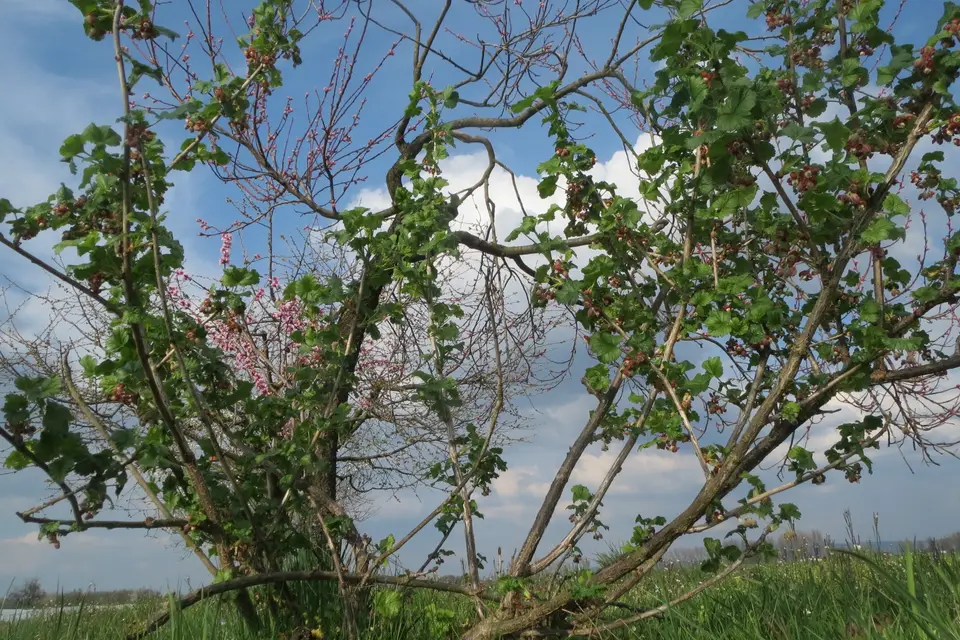
A gooseberry is a hardy, undemanding bush that crops from its second year, tolerates part shade, and lives happily for twenty years. It is also covered in spines, which is why fewer people grow it than should.
Same Ribes genus as currants, so the same thing applies: check whether your state restricts planting before you order one. The federal ban ended in 1966 but state and county rules persist in places.
The two crops from one bush
Something people don’t realise: you can pick a gooseberry bush twice, for two different things.
Thin the fruit in early summer, while it’s green and hard, and use the thinnings for cooking. They’re intensely sour and full of pectin, which is exactly what a crumble or jam wants. Then leave the rest to ripen through to soft, sweet and red or amber, and eat those raw.
A properly ripe dessert gooseberry is a different fruit from the green ones in shops, and it’s the main reason to grow your own. Nobody sells them ripe, because they don’t travel.
Pruning, and getting your hands out again
Prune to an open goblet: a short leg, then stems radiating outward, with the middle kept clear. This isn’t aesthetic. An open centre lets air through, which is the main defence against mildew, and it lets you get a hand into the bush without being shredded.
Cut out the oldest stems each winter and keep a mix of ages, as with currants. Shorten side shoots to a few buds.
Long sleeves. Always.
What goes wrong
White felty coating on shoots and fruit. American gooseberry mildew, the main disease of this crop. It goes from unsightly to crop-destroying quickly. Resistant varieties plus an open, airy bush is most of the answer; crowding and shade make it much worse.
Sawfly larvae strip the bush bare in days. Gooseberry sawfly is astonishingly fast: a full bush to bare stems in under a week. Check the centre of the bush from late spring; the caterpillars start low and inside. Picking them off works if you catch it early.
Fruit stays small and sour. Often just unthinned, sometimes drought. Thinning improves what’s left.
Where to put it
Part shade is acceptable, full sun better, with about four feet of width. Cool, moisture-retaining soil suits it, and it’s more forgiving of a heavy soil than most fruit.
Don’t put it beside a path or anywhere someone reaches past regularly. Put it where you approach it deliberately, wearing sleeves, once a week in season.
Source: Growing currants and gooseberries in the home garden, University of Minnesota Extension.
Companion planting guide for Gooseberry · Find your planting dates
Typically viable in USDA zones 3-8. Not sure your zone? Look it up by ZIP code.
Mature height: 3-4 ft
Method: Buy as a start: Buy as a nursery start and transplant outside. It's slow or unreliable from seed, so most gardeners skip seed-starting it entirely.
When to plant gooseberry, by zone
Every zone gooseberry grows in. Pick your zone in the header and it will be highlighted here. Each zone links to its full page.
| Zone | Start indoors | Sow or plant out | Harvest |
|---|---|---|---|
| 3a & 3b | Buy as a start | May 2–May 9 | First real harvest the season after planting |
| 4a & 4b | Buy as a start | Apr 17–Apr 24 | First real harvest the season after planting |
| 5a & 5b | Buy as a start | Apr 12–Apr 19 | First real harvest the season after planting |
| 6a & 6b | Buy as a start | Mar 28–Apr 4 | First real harvest the season after planting |
| 7a & 7b | Buy as a start | Mar 13–Mar 20 | First real harvest the season after planting |
| 8a & 8b | Buy as a start | Feb 25–Mar 4 | First real harvest the season after planting |
See exact start-indoors, direct-sow, and harvest dates for your zone →
How many Gooseberry plants fit per square foot?
Spacing: about 20 square feet per plant (square-foot-gardening spacing). Mature height: 3-4 ft.
Varieties worth considering
- Culinary varieties: Picked green and hard in early summer for pies, crumbles and jam, when the fruit is at its most acidic and highest in pectin. Heavier cropping than dessert types and less fussy. (source)
- Dessert varieties: Left on the bush to ripen soft and sweet, red or amber, and eaten raw. Worth growing if you have never had a properly ripe gooseberry, which is nothing like the sour green ones sold for cooking. (source)
- Mildew-resistant varieties: American gooseberry mildew is the thing that ruins this crop, and resistance varies a lot. 'Invicta', 'Hinnonmaki' and 'Captivator' are the names to look for; 'Captivator' is also nearly thornless. (source)
Why each variety is listed comes from the source shown next to it. We haven't grown these ourselves yet, so treat this as a research-backed starting point, not a personal endorsement. The buy links are separate from those sources: they go to seed suppliers that sell that exact variety, and we may earn a commission on some of them.
Where to buy gooseberry starts
Gooseberry is almost always bought as a nursery start rather than seeded. Check a local nursery or garden center; we haven't vetted online start/plant suppliers yet.
As an Amazon Associate we earn from qualifying purchases. Some links on this page also go to other retailers we may earn a commission from as an affiliate, at no extra cost to you. We only recommend products with a clear consensus of positive, independent reviews, or ones we bought and use ourselves. Each item on our gear page says which.
See it growing
Search YouTube for "growing gooseberry" videos → (a live search, not a hand-picked video; results vary and aren't vetted by us)

Pin this for later
Growing Gooseberry: Gooseberries crop from year two, take part shade, and are thorny enough to need thinking about. Dessert or culinary varieties, pruning for access, and the Ribes restriction.
Save to Pinterest