Growing Elderberry: A Complete Profile
By Growing Home Greens Team · August 10, 2026
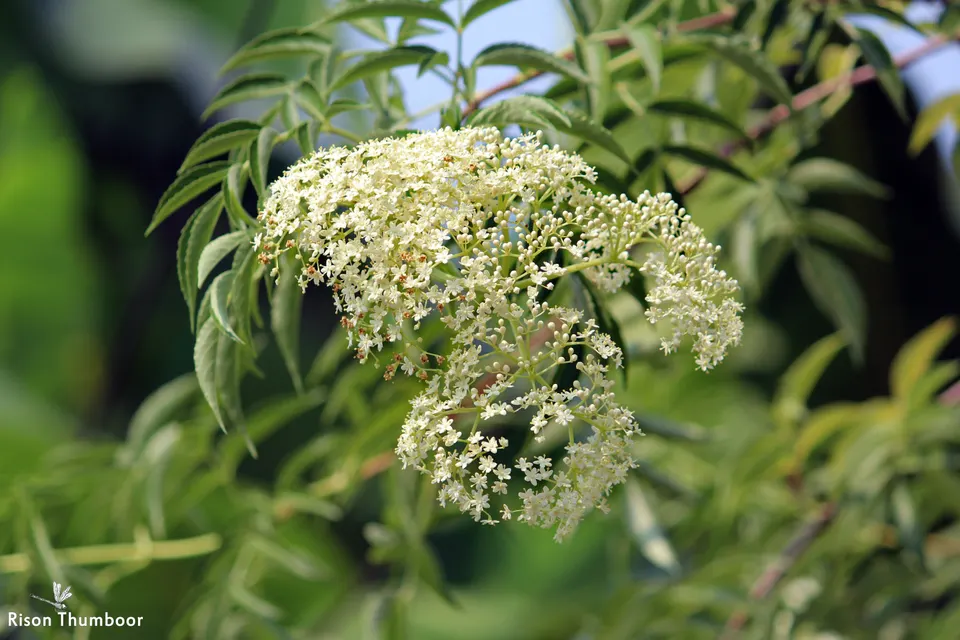
Elderberry is a fruiting shrub that tolerates wet, poorly drained spots better than most fruit crops, a genuine option for a low corner of the yard that other fruit wouldn’t handle.
Site and soil
Full sun to partial shade works, though full sun gives the best production. The soil should be wet but well-drained; where drainage is a problem, planting on a raised berm avoids waterlogging the roots. Elderberry prefers slightly acidic soil, tolerating a pH range of about 5.5 to 6.5.
Planting and pollination
Plant dormant shrubs in spring, watering well after planting to settle the soil. Strip all flowers in the first year so the plant puts its energy into root development rather than fruit; it then crops reliably for many years. Plant two different cultivars near each other, since cross-pollination between varieties produces a bigger, more reliable crop than a single variety alone.
Pruning and harvest
Fruit forms mainly on one- and two-year-old wood, so late-winter pruning to remove older canes keeps the shrub productive rather than woody and unproductive at the center. Flowering happens in June, with fruit ripening from July through September depending on the cultivar.
Elderberry has no well-established companion pairings, and nothing it needs to be kept away from. Given its tolerance for wet soil, it’s a good candidate for a low or poorly drained corner of the Garden Designer that other fruit crops would struggle in.
Source: Elderberry, West Virginia University Extension.
Companion planting guide for Elderberry · Find your planting dates
Typically viable in USDA zones 3-9. Not sure your zone? Look it up by ZIP code.
Mature height: 8-10 ft
Method: Buy as a start: Buy as a nursery start and transplant outside. It's slow or unreliable from seed, so most gardeners skip seed-starting it entirely.
When to plant elderberry, by zone
Every zone elderberry grows in. Pick your zone in the header and it will be highlighted here. Each zone links to its full page.
| Zone | Start indoors | Sow or plant out | Harvest |
|---|---|---|---|
| 3a & 3b | Buy as a start | May 16–May 23 | First real harvest in year 3 |
| 4a & 4b | Buy as a start | May 1–May 8 | First real harvest in year 3 |
| 5a & 5b | Buy as a start | Apr 26–May 3 | First real harvest in year 3 |
| 6a & 6b | Buy as a start | Apr 11–Apr 18 | First real harvest in year 3 |
| 7a & 7b | Buy as a start | Mar 27–Apr 3 | First real harvest in year 3 |
| 8a & 8b | Buy as a start | Mar 11–Mar 18 | First real harvest in year 3 |
| 9a & 9b | Buy as a start | Feb 1–Feb 8 | First real harvest in year 3 |
See exact start-indoors, direct-sow, and harvest dates for your zone →
How many Elderberry plants fit per square foot?
Spacing: about 50 square feet per plant (square-foot-gardening spacing). Mature height: 8-10 ft.
Varieties worth considering
- 'Adams' elderberry: West Virginia University Extension recommends Adams (No. 1 and No. 2) as vigorous, very winter-hardy cultivars suited to zones 3-9, among the most productive of the commonly available named selections. (source)
- 'York' elderberry (best for: large berries, later harvest): Stark Bro's Nursery describes York as one of the largest-berried, most prolific elderberry varieties, ripening mid-to-late August, later than Nova, which extends the harvest window. Like Adams it needs a different variety within 100 feet for pollination, so the two work well planted together. (source)
Why each variety is listed comes from the source shown next to it. We haven't grown these ourselves yet, so treat this as a research-backed starting point, not a personal endorsement. The buy links are separate from those sources: they go to seed suppliers that sell that exact variety, and we may earn a commission on some of them.
Where to buy elderberry starts
Elderberry is almost always bought as a nursery start rather than seeded. Check a local nursery or garden center; we haven't vetted online start/plant suppliers yet.
As an Amazon Associate we earn from qualifying purchases. Some links on this page also go to other retailers we may earn a commission from as an affiliate, at no extra cost to you. We only recommend products with a clear consensus of positive, independent reviews, or ones we bought and use ourselves. Each item on our gear page says which.
See it growing
Search YouTube for "growing elderberry" videos → (a live search, not a hand-picked video; results vary and aren't vetted by us)

Pin this for later
Growing Elderberry: A fruiting shrub that tolerates wet, poorly drained spots better than most fruit, valued for its berries in syrup, jam, and wine.
Save to Pinterest