Growing Dutch Iris: A Complete Profile
By Growing Home Greens Team · July 18, 2026
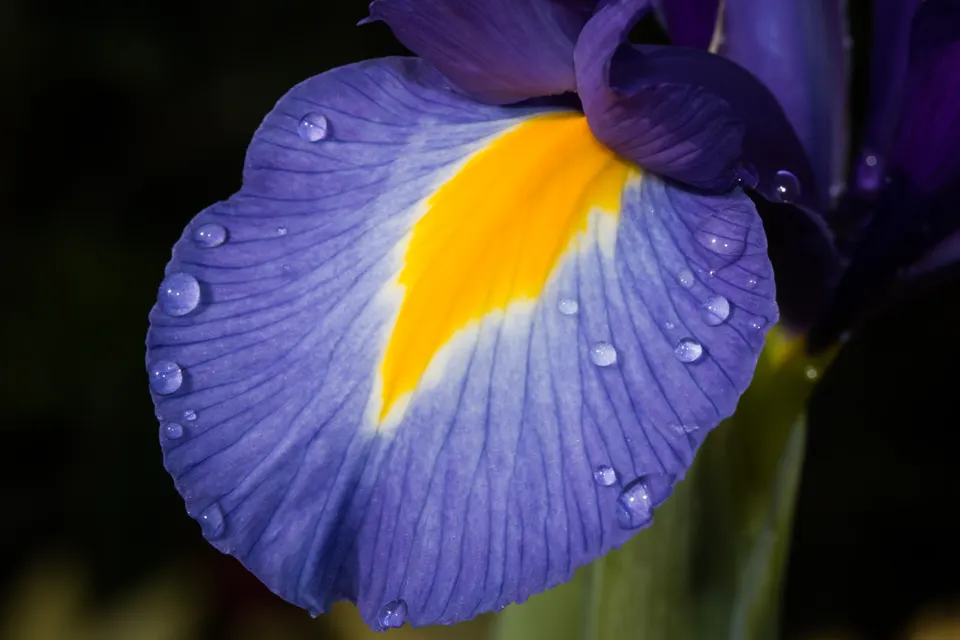
Dutch iris grows from a true bulb, not the thick rhizome most gardeners associate with bearded iris, and the flowers look closer to what florists sell than to a typical garden iris: tall, slender stems topped with blue, purple, yellow, or white blooms in early summer.
Planting in fall, blooming the following spring
Plant bulbs in fall, several weeks before the ground freezes, timed to your zone. This one has a narrower hardiness range (zones 5-8) than most of the other fall bulbs here. Bloom follows in May or June, earlier in warmer zones and later in colder ones. It’s one of the slower bulbs to reach bloom from planting, over 200 days, so patience through a full fall-winter-spring cycle is part of the deal.
Shorter-lived than daffodils or crocus
Dutch iris is shorter-lived as a perennial than daffodils or crocus. It often performs best in its first two or three years and can fade out after that, especially in heavy or poorly drained soil. Rot is the most common failure and almost always traces back to wet soil over winter; this bulb wants a well-drained spot more than most. Bulbs that come up as foliage only, with no flower, are usually undersized bulbs from the start rather than a growing mistake.
A short-term fixture, not a decades-long anchor
Dutch iris blooms in early summer, later than tulips and daffodils but ahead of most perennials, which makes it useful for extending color through that transition. See the full companion guide for Dutch iris for what pairs well with it. Its narrower zone range and shorter perennial life are worth factoring into the Garden Designer: plan on it as a shorter-term fixture in a bed rather than a decades-long anchor planting.
Companion planting guide for Dutch Iris · Find your planting dates
Typically viable in USDA zones 5-8. Not sure your zone? Look it up by ZIP code.
Mature height: 1.5-2 ft
Method: Direct sow: Direct-sow outside. It doesn't transplant well, or doesn't need the extra time indoors.
When to plant Dutch iris, by zone
Every zone Dutch iris grows in. Pick your zone in the header and it will be highlighted here. Each zone links to its full page.
| Zone | Start indoors | Sow or plant out | Bloom |
|---|---|---|---|
| 5a & 5bFall window | Not usually | Sep–Nov | ~210 days after direct-sowing |
| 6a & 6bFall window | Not usually | Sep–Nov | ~210 days after direct-sowing |
| 7a & 7bFall window | Not usually | Sep–Nov | ~210 days after direct-sowing |
| 8a & 8bFall window | Not usually | Sep–Nov | ~210 days after direct-sowing |
Bloom dates are about 210 days after the sow or plant-out date.
See exact start-indoors, direct-sow, and harvest dates for your zone →
How many Dutch Iris plants fit per square foot?
Spacing: 4 per square foot (square-foot-gardening spacing). Mature height: 1.5-2 ft.
Varieties worth considering
- 'Romano': University of Georgia CAES horticulture writing describes it as an 'incredible, showy bloomer' still going strong in the Coastal Georgia Botanical Gardens years after planting, holding up better than a one-season bloom. (source)
- 'Telstar': The same UGA CAES piece describes it as 'naturalizing wonderfully well' after three years in the ground, alongside Romano as one of the two varieties the author calls out by name for lasting performance. (source)
- 'Wedgewood': Also named in the same UGA CAES article, described as 'exquisite' in a mixed planting with Louisiana phlox and daffodils. A third named option if Romano or Telstar aren't available. (source)
Why each variety is listed comes from the source shown next to it. We haven't grown these ourselves yet, so treat this as a research-backed starting point, not a personal endorsement. The buy links are separate from those sources: they go to seed suppliers that sell that exact variety, and we may earn a commission on some of them.
Where to buy Dutch iris bulbs
We haven't vetted bulb/tuber suppliers yet. Our seed-supplier list doesn't carry these.
As an Amazon Associate we earn from qualifying purchases. Some links on this page also go to other retailers we may earn a commission from as an affiliate, at no extra cost to you. We only recommend products with a clear consensus of positive, independent reviews, or ones we bought and use ourselves. Each item on our gear page says which.
See it growing
Search YouTube for "growing Dutch iris" videos → (a live search, not a hand-picked video; results vary and aren't vetted by us)

Pin this for later
Growing Dutch Iris: A bulb iris that blooms like a cut-flower-shop flower, distinct from the rhizome-grown bearded iris most gardeners picture.
Save to Pinterest