Growing Cucamelon: A Complete Profile
By Growing Home Greens Team · August 20, 2026
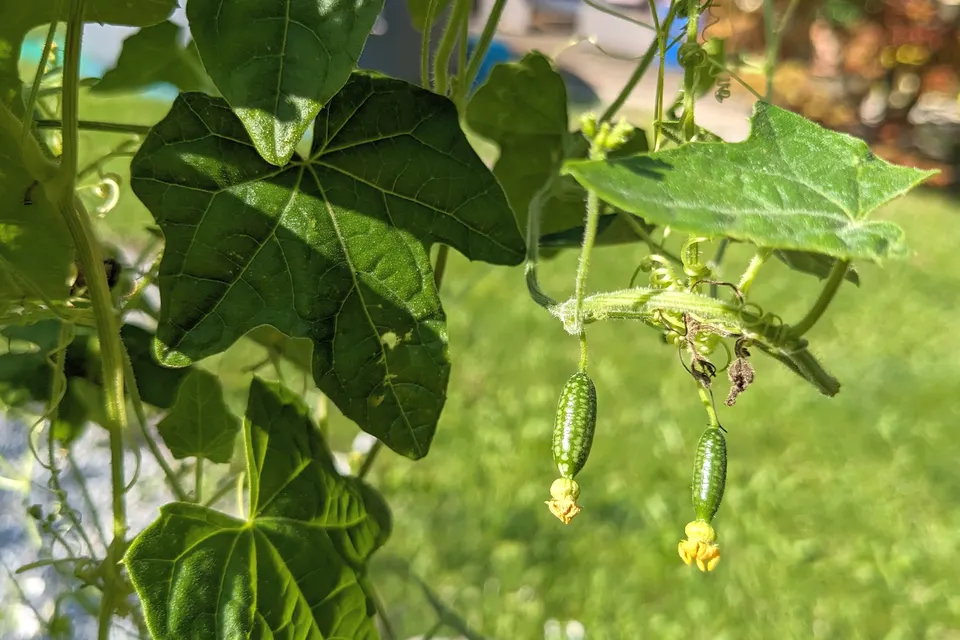
Cucamelon is one of the few crops here where the fruit is a novelty and the plant is not. It grows like a small, determined cucumber and it climbs hard.
Give it something to climb before you sow
The Royal Horticultural Society lists it as a climbing perennial with double-spiralled tendrils, reaching 2.5 to 4 metres. In a raised bed that means a trellis at least six feet high, put in before the vine needs it. The tendrils find their own way once they reach a support, so you do not have to tie it in.
Left on the ground it sprawls across everything around it and the fruit sits in the dirt, which is the usual reason a first attempt disappoints.
Slow to start, then relentless
It is slow out of the gate and does very little for the first several weeks, which catches people out. Once it gets going it produces steadily until frost. Starting it indoors about four weeks before your last frost and setting it out two weeks after gives it the warm start it wants.
The fruit is picked at grape size, when it is firm. Left on the vine it goes soft and seedy without ever becoming interesting.
Not hardy anywhere cold
The RHS rates it H1C, meaning it can go outside in summer but will not survive a frost. It does form small tubers that some gardeners lift and overwinter, though most people treat it as an annual and sow fresh.
Source: Royal Horticultural Society, Melothria scabra.
Companion planting guide for Cucamelon · Find your planting dates
Typically viable in USDA zones 4-11. Not sure your zone? Look it up by ZIP code.
Mature height: 8-13.5 ft
Method: Start indoors: Start indoors from seed, then transplant outside. It needs a head start most zones can't give it by direct-sowing alone.
When to plant cucamelon, by zone
Every zone cucamelon grows in. Pick your zone in the header and it will be highlighted here. Each zone links to its full page.
| Zone | Start indoors | Sow or plant out | Harvest |
|---|---|---|---|
| 4a & 4b | Apr 17–Apr 24 | May 29–Jun 5 | Aug 7–Aug 14 |
| 5a & 5b | Apr 12–Apr 19 | May 24–May 31 | Aug 2–Aug 9 |
| 6a & 6b | Mar 28–Apr 4 | May 9–May 16 | Jul 18–Jul 25 |
| 7a & 7b | Mar 13–Mar 20 | Apr 24–May 1 | Jul 3–Jul 10 |
| 8a & 8b | Feb 25–Mar 4 | Apr 8–Apr 15 | Jun 17–Jun 24 |
| 9a & 9b | Jan 18–Jan 25 | Mar 1–Mar 8 | May 10–May 17 |
| 10a & 10b | Jan 2–Jan 9 | Feb 13–Feb 20 | Apr 24–May 1 |
| 11a & 11b | Dec 4–Dec 11 | Jan 15–Jan 22 | Mar 26–Apr 2 |
Harvest dates are about 70 days after the sow or plant-out date, not after starting seeds indoors.
See exact start-indoors, direct-sow, and harvest dates for your zone →
How many Cucamelon plants fit per square foot?
Spacing: 1 per square foot (square-foot-gardening spacing). Mature height: 8-13.5 ft.
Where to buy cucamelon seeds
True Leaf Market (each supplier's cucamelon seeds)
As an Amazon Associate we earn from qualifying purchases. Some links on this page also go to other retailers we may earn a commission from as an affiliate, at no extra cost to you. We only recommend products with a clear consensus of positive, independent reviews, or ones we bought and use ourselves. Each item on our gear page says which.
See it growing
Search YouTube for "growing cucamelon" videos → (a live search, not a hand-picked video; results vary and aren't vetted by us)

Pin this for later
Growing Cucamelon: Grape-sized fruit that tastes of cucumber and lime, on a vine that climbs to eight feet or more.
Save to Pinterest