Growing Crocus: A Complete Profile
By Growing Home Greens Team · July 18, 2026
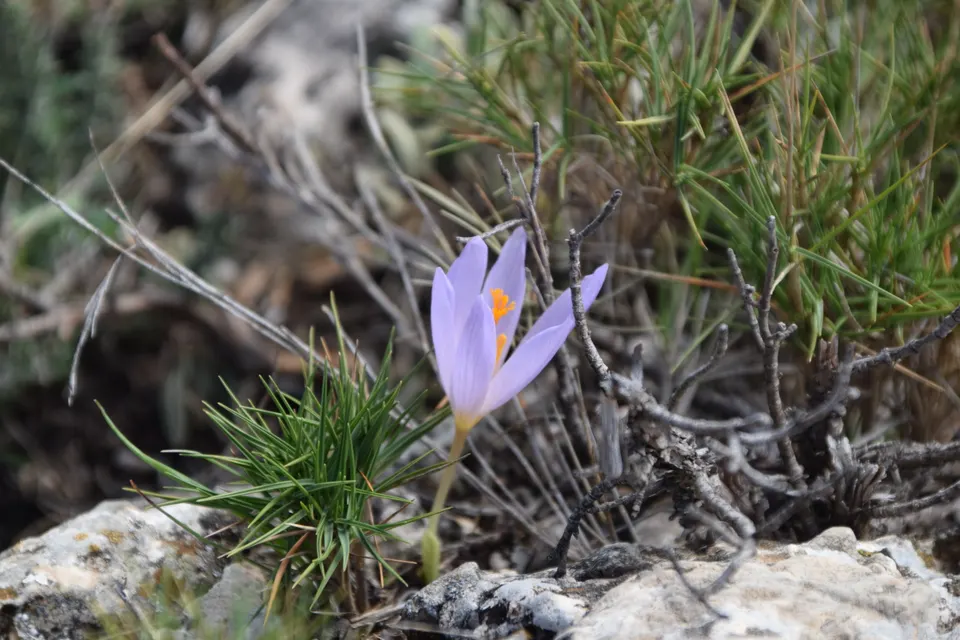
Crocus is grown from a corm, not a bulb, and it’s usually the very first thing to bloom in the garden, sometimes pushing up through late snow in early spring, weeks before daffodils or tulips get going. The whole plant is small, just 3 to 6 inches, with cup-shaped blooms in purple, yellow, or white.
Planting corms in fall, deep enough for cold
Plant corms in fall, a couple inches deep, across the whole zone 3-8 range on roughly the same fall timeline. Crocus needs at least 10 weeks below 45°F to bloom properly, so a mild winter or a warm microclimate can leave it flowering weakly or not at all. Because the corms and foliage are small, crocus is usually planted thick (a dozen per square foot is normal) for the drift effect most gardeners want rather than isolated single flowers.
Squirrels are the bigger risk than the cold
Crocus that fails to come up at all the following spring is most often squirrels or chipmunks digging up and eating the corms over winter, a bigger risk for crocus than for most other spring bulbs. Weak or absent bloom despite corms surviving is usually a chilling problem: not enough consistent cold before the ground warms up. Foliage that gets mowed or cut back too soon after bloom weakens next year’s corm the same way it does with tulips and daffodils.
Gone before summer plants need the space
Crocus blooms and finishes early enough to be gone well before summer plants need the space, making it one of the easiest bulbs to tuck under later-emerging perennials or groundcover. See the full companion guide for crocus for pairings. Its dense planting (around 12 per square foot) makes it a good fit for edges and borders in the Garden Designer rather than open bed space.
Companion planting guide for Crocus · Find your planting dates
Typically viable in USDA zones 3-8. Not sure your zone? Look it up by ZIP code.
Mature height: 3-6 in
Method: Direct sow: Direct-sow outside. It doesn't transplant well, or doesn't need the extra time indoors.
When to plant crocus, by zone
Every zone crocus grows in. Pick your zone in the header and it will be highlighted here. Each zone links to its full page.
| Zone | Start indoors | Sow or plant out | Bloom |
|---|---|---|---|
| 3a & 3bFall window | Not usually | Sep–Nov | ~150 days after direct-sowing |
| 4a & 4bFall window | Not usually | Sep–Nov | ~150 days after direct-sowing |
| 5a & 5bFall window | Not usually | Sep–Nov | ~150 days after direct-sowing |
| 6a & 6bFall window | Not usually | Sep–Nov | ~150 days after direct-sowing |
| 7a & 7bFall window | Not usually | Sep–Nov | ~150 days after direct-sowing |
| 8a & 8bFall window | Not usually | Sep–Nov | ~150 days after direct-sowing |
Bloom dates are about 150 days after the sow or plant-out date.
See exact start-indoors, direct-sow, and harvest dates for your zone →
How many Crocus plants fit per square foot?
Spacing: 12 per square foot (square-foot-gardening spacing). Mature height: 3-6 in.
Varieties worth considering
- Crocus tommasinianus: NC State Extension's plant toolbox notes it's 'reportedly resistant to foraging by squirrels' and naturalizes well, worth choosing over common Dutch crocus (Crocus vernus hybrids) if squirrels have dug up bulbs in your garden before. (source)
- Crocus vernus 'Pickwick': Missouri Botanical Garden's Plant Finder describes silver-lilac flowers heavily striped with darker lilac, blooming in April, about three weeks of bloom. A Dutch crocus, so it doesn't carry tommasinianus's squirrel resistance, but the striped pattern is distinct from a plain purple or yellow crocus. (source)
- Crocus vernus 'Jeanne d'Arc': Also Missouri Botanical Garden, pure white petals with a small purple base and bright orange pistil, blooming in March, earlier than Pickwick. The white option if you want to break up a bed that's otherwise all purple and yellow. (source)
Why each variety is listed comes from the source shown next to it. We haven't grown these ourselves yet, so treat this as a research-backed starting point, not a personal endorsement. The buy links are separate from those sources: they go to seed suppliers that sell that exact variety, and we may earn a commission on some of them.
Where to buy crocus bulbs
We haven't vetted bulb/tuber suppliers yet. Our seed-supplier list doesn't carry these.
As an Amazon Associate we earn from qualifying purchases. Some links on this page also go to other retailers we may earn a commission from as an affiliate, at no extra cost to you. We only recommend products with a clear consensus of positive, independent reviews, or ones we bought and use ourselves. Each item on our gear page says which.
See it growing
Search YouTube for "growing crocus" videos → (a live search, not a hand-picked video; results vary and aren't vetted by us)

Pin this for later
Growing Crocus: The earliest color in the spring garden, often blooming through the last patches of snow.
Save to Pinterest