Growing Cranberry Hibiscus: A Complete Profile
By Growing Home Greens Team · August 10, 2026
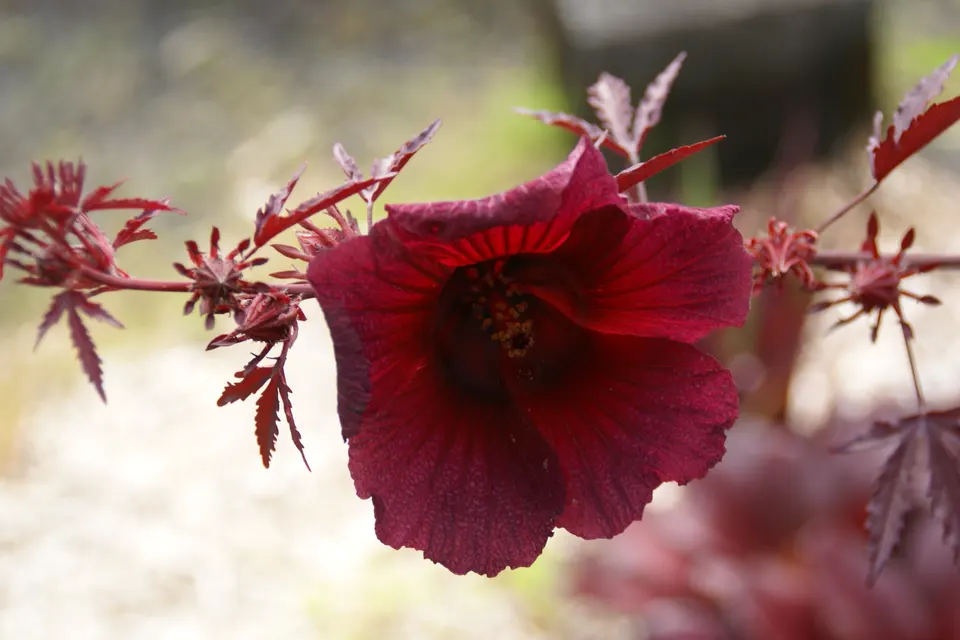
Cranberry hibiscus, also called false roselle, is grown for its deep burgundy foliage rather than for its actual hibiscus flowers, prized in floral arrangements as a dramatic, colorful cut foliage.
The color needs real sun
This is a genuine detail worth planning for: foliage started or grown in a greenhouse shows green tones with a bit of rust, and only matures to its full burgundy color once the plant has real outdoor sun exposure. A plant that looks disappointingly green in a nursery flat often colors up dramatically within weeks of being planted outside.
A heat-loving crop
Transplant, sowing seed 6 to 8 weeks before planting out, covered lightly. Germination is fast, just 3 to 5 days at 70-76°F. Transplant out after frost danger passes, and consider a soil-warming mulch like black plastic, since this is a genuine heat lover that benefits from extra warmth to get established quickly. Space plants 24 to 36 inches apart; mature plants reach 40 to 70 inches tall. It’s hardy in zones 8-9, grown as an annual colder.
Harvest
For cut foliage, harvest once leaves are mature, not tender, and stems are straight, firm, and at least slightly woody. Pinching isn’t required, but pinching young plants encourages longer, higher-quality lateral branches.
Cranberry hibiscus has no well-established companion pairings, and nothing it needs to be kept away from. At a quarter plant per square foot, it needs a dedicated sunny spot in the Garden Designer to develop its full color, not a partly shaded corner.
Source: Hibiscus: Key Growing Information, Johnny’s Selected Seeds.
Companion planting guide for Cranberry Hibiscus · Find your planting dates
Typically viable in USDA zones 8-9. Not sure your zone? Look it up by ZIP code.
Mature height: 3.5-6 ft
Method: Start indoors: Start indoors from seed, then transplant outside. It needs a head start most zones can't give it by direct-sowing alone.
When to plant cranberry hibiscus, by zone
Every zone cranberry hibiscus grows in. Pick your zone in the header and it will be highlighted here. Each zone links to its full page.
| Zone | Start indoors | Sow or plant out | Bloom |
|---|---|---|---|
| 8a & 8b | Feb 4–Feb 11 | Apr 1–Apr 8 | Jul 10–Jul 17 |
| 9a & 9b | Dec 28–Jan 4 | Feb 22–Mar 1 | Jun 2–Jun 9 |
Bloom dates are about 100 days after the sow or plant-out date, not after starting seeds indoors.
See exact start-indoors, direct-sow, and harvest dates for your zone →
How many Cranberry Hibiscus plants fit per square foot?
Spacing: about 4 square feet per plant (square-foot-gardening spacing). Mature height: 3.5-6 ft.
Varieties worth considering
- 'Mahogany Splendor' cranberry hibiscus: Johnny's Selected Seeds describes this as having deep mahogany-red foliage for cutting and garden accent, one of their standard offerings of the species. (source)
Why each variety is listed comes from the source shown next to it. We haven't grown these ourselves yet, so treat this as a research-backed starting point, not a personal endorsement. The buy links are separate from those sources: they go to seed suppliers that sell that exact variety, and we may earn a commission on some of them.
Where to buy cranberry hibiscus seeds
None of the seed suppliers we list carries cranberry hibiscus seeds right now. A local garden center or a specialty seed house is the place to look.
As an Amazon Associate we earn from qualifying purchases. Some links on this page also go to other retailers we may earn a commission from as an affiliate, at no extra cost to you. We only recommend products with a clear consensus of positive, independent reviews, or ones we bought and use ourselves. Each item on our gear page says which.
See it growing
Search YouTube for "growing cranberry hibiscus" videos → (a live search, not a hand-picked video; results vary and aren't vetted by us)

Pin this for later
Growing Cranberry Hibiscus: Grown for its deep burgundy foliage rather than its hibiscus flowers, prized as cut foliage in floral arrangements, with color that only fully develops in outdoor sun.
Save to Pinterest