Growing Coneflower: A Complete Profile
By Growing Home Greens Team · July 18, 2026
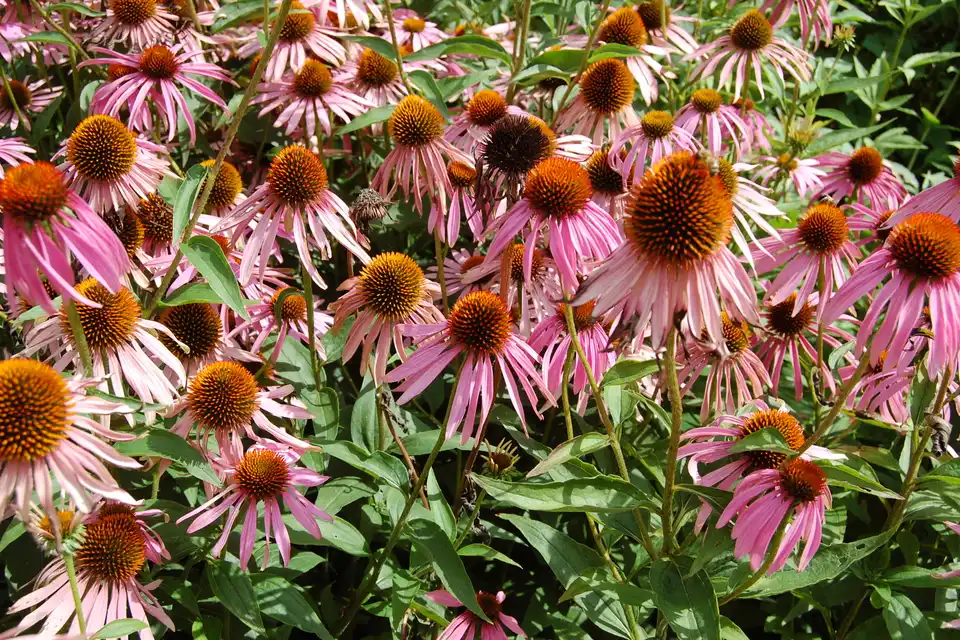
Coneflower is a genuine perennial, not a flower you plant once and rely on for a bloom that same season. It’s here for the long-term structure it gives the garden and the pollinators it pulls in year after year, once it’s established: 2- to 4-foot stems topped with pink or purple petals drooping away from a raised, spiky orange-brown cone.
Sowing it, and waiting a year for flowers
Coneflower can be started indoors about 9 weeks before your last frost or direct-sown about 2 weeks after it, at a shallow 1/8-inch depth. It’s budgeted at a generous 3 square feet per plant (0.33 per square foot) and it needs it. Mature clumps spread wide. The honest catch: sown from seed, it typically doesn’t bloom well until its second year, since it spends the first season building roots. If you want flowers the first summer, buy nursery-grown plants instead of starting from seed.
No bloom in year one is normal, not a problem
A coneflower that looks fine but never blooms in year one isn’t struggling. That’s normal first-year behavior from seed, not a problem to fix. In later years, sparse centers or dieback in the middle of an established clump usually mean it’s time to divide it; coneflower is otherwise a low-maintenance, drought-tolerant plant once it’s rooted in.
A permanent fixture, not a seasonal rotation
Coneflower’s daisy-family flowers are a reliable long-season draw for bees and butterflies working the vegetable beds nearby. See the full companion guide for coneflower. Because it holds the same square footage for years rather than one season, plan its spot in the Garden Designer as a permanent fixture, not something you’ll rotate out next year.
Companion planting guide for Purple Coneflower · Find your planting dates
Typically viable in USDA zones 3-8. Not sure your zone? Look it up by ZIP code.
Mature height: 2-3 ft
Method: Either: Start indoors for an earlier harvest, or direct-sow outside for less fuss. Either works.
When to plant purple coneflower, by zone
Every zone purple coneflower grows in. Pick your zone in the header and it will be highlighted here. Each zone links to its full page.
| Zone | Start indoors | Sow or plant out | Bloom |
|---|---|---|---|
| 3a & 3b | Mar 28–Apr 4 | May 9–May 16 | About a year after planting |
| 4a & 4b | Mar 13–Mar 20 | Apr 24–May 1 | About a year after planting |
| 5a & 5b | Mar 8–Mar 15 | Apr 19–Apr 26 | About a year after planting |
| 6a & 6b | Feb 21–Feb 28 | Apr 4–Apr 11 | About a year after planting |
| 7a & 7b | Feb 6–Feb 13 | Mar 20–Mar 27 | About a year after planting |
| 8a & 8b | Jan 21–Jan 28 | Mar 4–Mar 11 | About a year after planting |
See exact start-indoors, direct-sow, and harvest dates for your zone →
How many Purple Coneflower plants fit per square foot?
Spacing: about 4 square feet per plant (square-foot-gardening spacing). Mature height: 2-3 ft.
Varieties worth considering
- 'Magnus': Clemson Cooperative Extension's Home & Garden Information Center lists 'Magnus' (rose-pink, 30-36 in.) as a variety that can be reliably propagated from seed and has held up as a consistent performer year after year, a safer bet from seed than cultivars that need division or cuttings to come true. (source)
- 'White Swan': Clemson HGIC lists this white-flowered type at 24-36 inches, also reliable from seed. The pick if you specifically want white rather than Magnus's rose-pink, without giving up seed-grown reliability. (source)
- 'PowWow White': A PanAm Seed selection and 2010 AAS winner Clemson notes as faster to flower, shorter, and more floriferous than other seed-grown types, at 2-3 feet on sturdy stems that don't need staking. Worth the tradeoff of a shorter plant for the earlier, heavier bloom. (source)
Why each variety is listed comes from the source shown next to it. We haven't grown these ourselves yet, so treat this as a research-backed starting point, not a personal endorsement. The buy links are separate from those sources: they go to seed suppliers that sell that exact variety, and we may earn a commission on some of them.
Where to buy purple coneflower seeds
True Leaf Market (purple coneflower seeds)
As an Amazon Associate we earn from qualifying purchases. Some links on this page also go to other retailers we may earn a commission from as an affiliate, at no extra cost to you. We only recommend products with a clear consensus of positive, independent reviews, or ones we bought and use ourselves. Each item on our gear page says which.
See it growing
Search YouTube for "growing purple coneflower" videos → (a live search, not a hand-picked video; results vary and aren't vetted by us)

Pin this for later
Growing Purple Coneflower: A true perennial pollinator magnet that takes a full year to establish. Buy a nursery start if you want blooms this season.
Save to Pinterest