Growing Chives: A Complete Profile
By Growing Home Greens Team · July 18, 2026
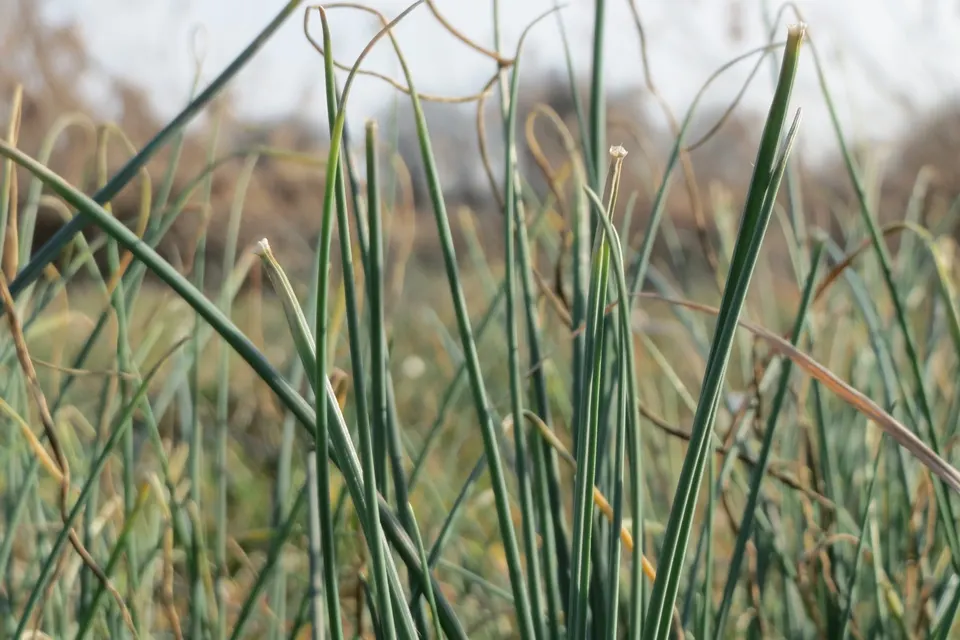
Chives are the easiest allium in the garden, a perennial clump that comes back every spring, tolerates cold well, and asks for almost nothing once it’s established.
Getting a clump started
Chives can be started indoors or direct-sown, and either works: indoors about 8 weeks before your last frost for a head start, or direct-sown a couple weeks before that frost date since the seedlings tolerate cool soil fine. As a perennial in zones 3-10, an established clump returns each spring and slowly expands. Many gardeners divide an overgrown clump every few years to keep it productive and to start new plants elsewhere.
The purple flowers are edible, and pollinators like them, but letting a lot of them go to seed can turn one clump into a spreading patch of volunteers. If that sounds like more chives than you want, plant ‘Profusion’: its flowers don’t set seed, so you get the same blooms without the spread.
Keeping the clump productive
A clump that flowers heavily and then looks thin afterward is normal. Cutting spent flower stalks back encourages fresh leaf growth instead of letting the plant put energy into seed. Because chives are an allium, avoid planting them right next to beans or peas: alliums inhibit the nitrogen-fixing bacteria those legumes depend on.
A long-term corner commitment
Chives share the same root-crop pest confusion benefit that carrots get from onions. See the full companion guide for chives. At 9 plants per square foot, they’re dense enough to tuck into a corner or edge in the Garden Designer, and since they’re perennial, that spot is a long-term commitment rather than one season’s crop.
Sources: Chives, Illinois Extension.
Companion planting guide for Chives · Find your planting dates
Typically viable in USDA zones 3-10. Not sure your zone? Look it up by ZIP code.
Mature height: 1-1.5 ft
Method: Either: Start indoors for an earlier harvest, or direct-sow outside for less fuss. Either works.
When to plant chives, by zone
Every zone chives grow in. Pick your zone in the header and it will be highlighted here. Each zone links to its full page.
| Zone | Start indoors | Sow or plant out | Harvest |
|---|---|---|---|
| 3a & 3b | Apr 4–Apr 11 | May 16–May 23 | Jul 15–Jul 22 |
| 4a & 4b | Mar 20–Mar 27 | May 1–May 8 | Jun 30–Jul 7 |
| 5a & 5b | Mar 15–Mar 22 | Apr 26–May 3 | Jun 25–Jul 2 |
| 6a & 6b | Feb 28–Mar 7 | Apr 11–Apr 18 | Jun 10–Jun 17 |
| 7a & 7b | Feb 13–Feb 20 | Mar 27–Apr 3 | May 26–Jun 2 |
| 8a & 8b | Jan 28–Feb 4 | Mar 11–Mar 18 | May 10–May 17 |
| 9a & 9b | Dec 21–Dec 28 | Feb 1–Feb 8 | Apr 2–Apr 9 |
| 10a & 10bFall window | Aug–Feb | Oct–Apr | ~60 days after transplanting |
Harvest dates are about 60 days after the sow or plant-out date, not after starting seeds indoors.
See exact start-indoors, direct-sow, and harvest dates for your zone →
How many Chives plants fit per square foot?
Spacing: 9 per square foot (square-foot-gardening spacing). Mature height: 1-1.5 ft.
Good companions for chives
- Carrot: Same allium/carrot pest-masking effect measured for onion and carrot (Uvah & Coaker 1984): a real, peer-reviewed field study, not folklore.
Full companion guide, including what to keep away from chives →
Varieties worth considering
- 'Profusion' chives (Allium schoenoprasum): Illinois Extension lists it as sterile: heavy flower production but no seed set. That solves the one real annoyance with chives, which is a patch that self-seeds into a lawn or path. Regular chives will do that if you let the flowers go; Profusion can't. (source)
- 'Grolau': A Swiss strain bred for indoor and container culture, with thick, dark, extra-strongly-flavored leaves and a tidier, less leggy habit than standard chives. Worth choosing specifically for a windowsill pot rather than an outdoor bed. (source)
- 'Staro': Johnny's calls this their heaviest-leafed chive, bred for markets that want a thicker leaf for freezing or drying rather than fresh cutting. The pick if you're growing enough to preserve, not just snip a few stems at a time. (source)
Why each variety is listed comes from the source shown next to it. We haven't grown these ourselves yet, so treat this as a research-backed starting point, not a personal endorsement. The buy links are separate from those sources: they go to seed suppliers that sell that exact variety, and we may earn a commission on some of them.
Where to buy chive seeds
Botanical Interests · True Leaf Market · Burpee · High Mowing Organic Seeds (each supplier's chive seeds)
As an Amazon Associate we earn from qualifying purchases. Some links on this page also go to other retailers we may earn a commission from as an affiliate, at no extra cost to you. We only recommend products with a clear consensus of positive, independent reviews, or ones we bought and use ourselves. Each item on our gear page says which.
See it growing
Search YouTube for "growing chives" videos → (a live search, not a hand-picked video; results vary and aren't vetted by us)

Pin this for later
Growing Chives: A cold-hardy allium perennial that's one of the first things up in spring and keeps producing with almost no care.
Save to Pinterest