Growing Catnip: A Complete Profile
By Growing Home Greens Team · July 25, 2026
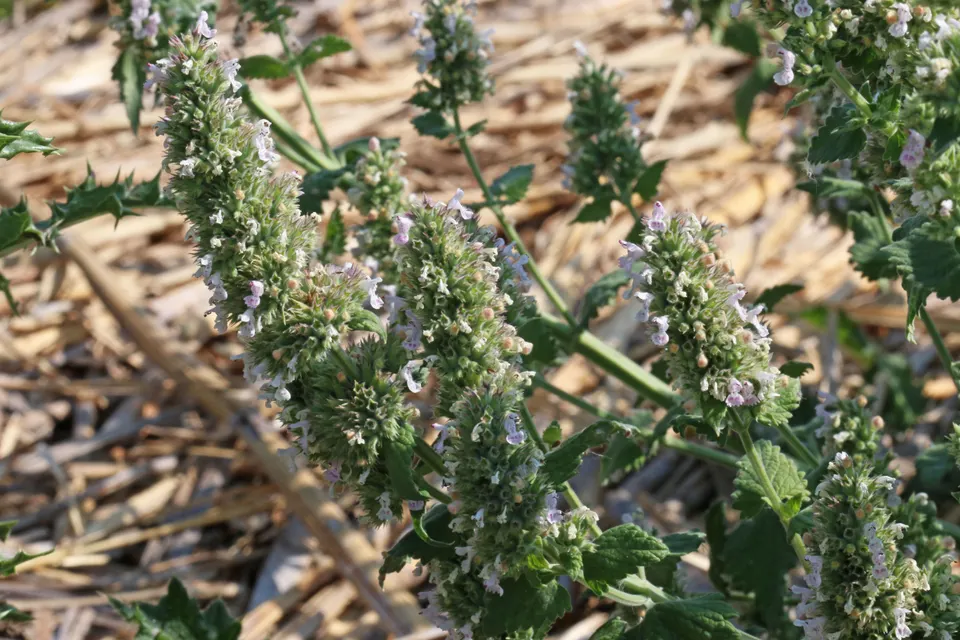
Catnip is a tough perennial herb in the mint family, grown as much for its famous effect on cats as for its own mild, minty-lemon flavor in tea.
Sowing it
Seeds need light to germinate, so barely cover them rather than burying them. Start indoors 6-8 weeks before your last spring frost, or direct-seed after last frost or in early fall. It’s a fast grower, reaching harvestable size around 75-85 days from seeding, and it’s hardy in zones 3-9, among the first perennials to emerge each spring.
If cats are the point, grow the straight species: it’s the one with the nepetalactone that sends them rolling. If tea is the point and you’d rather the plant survive long enough to harvest, ‘Citriodora’ gets you a lemon-scented leaf that cats mostly leave alone.
It spreads readily, by seed and by root
Left unchecked, catnip spreads readily by seed and by root, so give it a defined bed edge or a container if you don’t want it wandering. If you’re growing the straight species, it’s also worth fencing off from neighborhood cats early on. They’ll roll on and damage young plants before they’re established.
A permanent bed, fenced from the neighborhood cats
Treat catnip as a permanent perennial planting rather than part of the annual rotation, a herb bed or border works well, and well-drained soil with occasional division keeps a patch healthy for years.
Sources: Catnip, Johnny’s Selected Seeds; Catnip, Illinois Extension; Lemon-scented Plants, Wisconsin Horticulture Extension.
Companion planting guide for Catnip · Find your planting dates
Typically viable in USDA zones 3-9. Not sure your zone? Look it up by ZIP code.
Mature height: 1.5-3 ft
Method: Either: Start indoors for an earlier harvest, or direct-sow outside for less fuss. Either works.
When to plant catnip, by zone
Every zone catnip grows in. Pick your zone in the header and it will be highlighted here. Each zone links to its full page.
| Zone | Start indoors | Sow or plant out | Harvest |
|---|---|---|---|
| 3a & 3b | Apr 11–Apr 18 | May 30–Jun 6 | Aug 18–Aug 25 |
| 4a & 4b | Mar 27–Apr 3 | May 15–May 22 | Aug 3–Aug 10 |
| 5a & 5b | Mar 22–Mar 29 | May 10–May 17 | Jul 29–Aug 5 |
| 6a & 6b | Mar 7–Mar 14 | Apr 25–May 2 | Jul 14–Jul 21 |
| 7a & 7b | Feb 20–Feb 27 | Apr 10–Apr 17 | Jun 29–Jul 6 |
| 8a & 8b | Feb 4–Feb 11 | Mar 25–Apr 1 | Jun 13–Jun 20 |
| 9a & 9b | Dec 28–Jan 4 | Feb 15–Feb 22 | May 6–May 13 |
Harvest dates are about 80 days after the sow or plant-out date, not after starting seeds indoors.
See exact start-indoors, direct-sow, and harvest dates for your zone →
How many Catnip plants fit per square foot?
Spacing: 1 per square foot (square-foot-gardening spacing). Mature height: 1.5-3 ft.
Varieties worth considering
- 'Citriodora' (lemon catnip): If you're growing catnip for tea rather than for your cat, 'Citriodora' is the one to plant. Illinois Extension lists it as a distinct, lemon-scented cultivar, and Wisconsin Horticulture Extension notes it's usually not attractive to cats the way the straight species is, so it won't get flattened by the neighborhood cats before you get to harvest it. (source)
- 'Faassen': Illinois Extension describes this as a smaller, more compact form with a strong, pleasant scent, a middle option between the straight species' sprawling habit and Citriodora's lemon-scented, cat-repelling leaves. (source)
Why each variety is listed comes from the source shown next to it. We haven't grown these ourselves yet, so treat this as a research-backed starting point, not a personal endorsement. The buy links are separate from those sources: they go to seed suppliers that sell that exact variety, and we may earn a commission on some of them.
Where to buy catnip seeds
Botanical Interests · True Leaf Market · Burpee · High Mowing Organic Seeds (each supplier's catnip seeds)
As an Amazon Associate we earn from qualifying purchases. Some links on this page also go to other retailers we may earn a commission from as an affiliate, at no extra cost to you. We only recommend products with a clear consensus of positive, independent reviews, or ones we bought and use ourselves. Each item on our gear page says which.
See it growing
Search YouTube for "growing catnip" videos → (a live search, not a hand-picked video; results vary and aren't vetted by us)

Pin this for later
Growing Catnip: A hardy mint-family perennial, first up in spring every year and famously irresistible to cats.
Save to Pinterest