Growing Castor Bean: A Complete Profile
By Growing Home Greens Team · August 20, 2026
Castor bean is included here so this site can state plainly what it is, rather than leaving a gardener to find out from a packet that does not say.
Read this before you decide
NC State Extension rates the toxicity high. The poison is ricin, a phytotoxalbumin, along with the alkaloid ricinine. Every part of the plant is poisonous if eaten. The seeds are the dangerous part, and the toolbox states that it can be fatal if only a few seeds are ingested. Handling the foliage causes contact dermatitis in some people.
The seeds are attractive: glossy, mottled, and about the size of a large bean. That is precisely the problem.
If there is any chance of a child picking seed from this plant, do not grow it. If you do grow it, cut the seed heads off before they ripen.
Why people grow it anyway
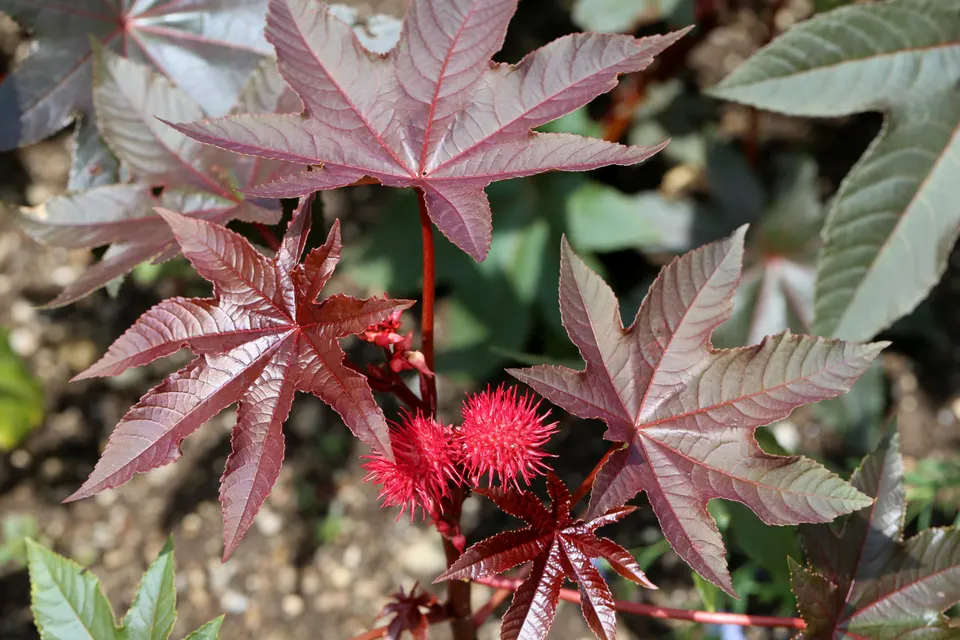
It produces six to ten feet of enormous palmate leaves, often bronze or deep red, in a single season from seed. Nothing else here gives that much structure that fast, which is why it appears in ornamental borders and why it keeps being sold.
It wants full sun and needs two to four feet of space. Perennial in zones 9 through 11, annual everywhere else.
Growing it
Seed goes in about an inch deep after the last frost, into warm soil. Soaking overnight speeds germination. Wear gloves when handling seed and when cutting the plant down.
Source: NC State Extension Gardener Plant Toolbox, Ricinus communis.
Companion planting guide for Castor Bean · Find your planting dates
Typically viable in USDA zones 3-11. Not sure your zone? Look it up by ZIP code.
Mature height: 6-10 ft
Method: Direct sow: Direct-sow outside. It doesn't transplant well, or doesn't need the extra time indoors.
When to plant castor bean, by zone
Every zone castor bean grows in. Pick your zone in the header and it will be highlighted here. Each zone links to its full page.
| Zone | Start indoors | Sow or plant out | Bloom |
|---|---|---|---|
| 3a & 3b | Not usually | Jun 6–Jun 13 | Sep 14–Sep 21 |
| 4a & 4b | Not usually | May 22–May 29 | Aug 30–Sep 6 |
| 5a & 5b | Not usually | May 17–May 24 | Aug 25–Sep 1 |
| 6a & 6b | Not usually | May 2–May 9 | Aug 10–Aug 17 |
| 7a & 7b | Not usually | Apr 17–Apr 24 | Jul 26–Aug 2 |
| 8a & 8b | Not usually | Apr 1–Apr 8 | Jul 10–Jul 17 |
| 9a & 9b | Not usually | Feb 22–Mar 1 | Jun 2–Jun 9 |
| 10a & 10b | Not usually | Feb 6–Feb 13 | May 17–May 24 |
| 11a & 11b | Not usually | Jan 8–Jan 15 | Apr 18–Apr 25 |
Bloom dates are about 100 days after the sow or plant-out date.
See exact start-indoors, direct-sow, and harvest dates for your zone →
How many Castor Bean plants fit per square foot?
Spacing: about 10 square feet per plant (square-foot-gardening spacing). Mature height: 6-10 ft.
Where to buy castor bean seeds
None of the seed suppliers we list carries castor bean seeds right now. A local garden center or a specialty seed house is the place to look.
As an Amazon Associate we earn from qualifying purchases. Some links on this page also go to other retailers we may earn a commission from as an affiliate, at no extra cost to you. We only recommend products with a clear consensus of positive, independent reviews, or ones we bought and use ourselves. Each item on our gear page says which.
See it growing
Search YouTube for "growing castor bean" videos → (a live search, not a hand-picked video; results vary and aren't vetted by us)

Pin this for later
Growing Castor Bean: Six to ten feet of dramatic foliage in one season, and seeds containing ricin that can kill a child.
Save to Pinterest