Growing Cardoon: A Complete Profile
By Growing Home Greens Team · August 10, 2026
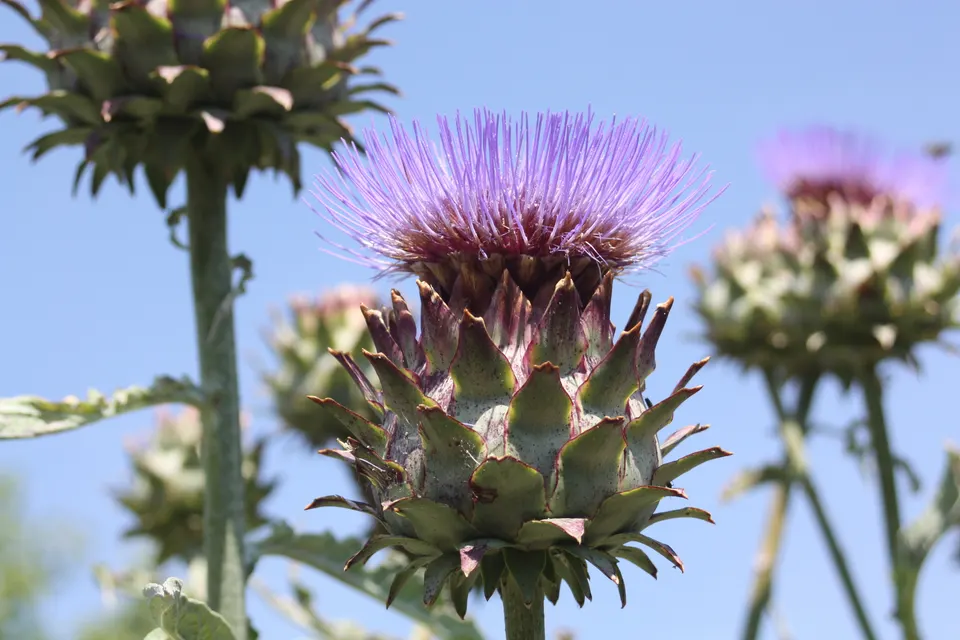
Cardoon is a close relative of the globe artichoke already covered on this site, but instead of harvesting a flower bud, it’s grown for its thick, blanched leaf stalks, a classic Mediterranean vegetable most American gardeners have never grown.
Give it real space
Transplant, sowing 2 to 3 seeds a quarter inch deep per cell, 6 to 8 weeks before your transplant date. Germinate at 70-80°F, then grow on at 60-70°F during the day and 50-60°F at night. Thin to one plant per cell once true leaves appear, then transplant 2 to 3 feet apart in rows 3 to 6 feet apart, protecting from frost. This is a large plant, closer to a perennial vegetable in scale than a compact annual, and needs a spot sized accordingly.
Blanching is the whole point
After about 3 months of growth, gather the stalks and tie them upright with twine, then wrap with black plastic or newspaper to exclude sunlight. Blanch for 3 to 4 weeks during cool weather. Without this step, the naturally bitter stalks aren’t worth eating; blanching is what turns cardoon from a tough, bitter plant into a genuine vegetable.
Harvest
Cut the stalks at the base after blanching to keep them intact for cooking.
Cardoon has no well-established companion pairings, and nothing it needs to be kept away from. At a quarter plant per square foot, it needs a dedicated large footprint in the Garden Designer, similar to artichoke.
Source: Cardoon: Key Growing Information, Johnny’s Selected Seeds.
Companion planting guide for Cardoon · Find your planting dates
Typically viable in USDA zones 7-10. Not sure your zone? Look it up by ZIP code.
Mature height: 3-4 ft
Method: Start indoors: Start indoors from seed, then transplant outside. It needs a head start most zones can't give it by direct-sowing alone.
When to plant cardoon, by zone
Every zone cardoon grows in. Pick your zone in the header and it will be highlighted here. Each zone links to its full page.
| Zone | Start indoors | Sow or plant out | Harvest |
|---|---|---|---|
| 7a & 7b | Feb 20–Feb 27 | Apr 24–May 1 | Aug 22–Aug 29 |
| 8a & 8b | Feb 4–Feb 11 | Apr 8–Apr 15 | Aug 6–Aug 13 |
| 9a & 9b | Dec 28–Jan 4 | Mar 1–Mar 8 | Jun 29–Jul 6 |
| 10a & 10b | Dec 12–Dec 19 | Feb 13–Feb 20 | Jun 13–Jun 20 |
Harvest dates are about 120 days after the sow or plant-out date, not after starting seeds indoors.
See exact start-indoors, direct-sow, and harvest dates for your zone →
How many Cardoon plants fit per square foot?
Spacing: about 4 square feet per plant (square-foot-gardening spacing). Mature height: 3-4 ft.
Varieties worth considering
- 'Porto Spineless': Johnny's Selected Seeds' cardoon offering, described as having artichoke-flavored leaf stalks and large purple flowers; there's little named-cultivar diversity beyond it in the seed trade this plant is sold through. (source)
Why each variety is listed comes from the source shown next to it. We haven't grown these ourselves yet, so treat this as a research-backed starting point, not a personal endorsement. The buy links are separate from those sources: they go to seed suppliers that sell that exact variety, and we may earn a commission on some of them.
Where to buy cardoon seeds
True Leaf Market (each supplier's cardoon seeds)
As an Amazon Associate we earn from qualifying purchases. Some links on this page also go to other retailers we may earn a commission from as an affiliate, at no extra cost to you. We only recommend products with a clear consensus of positive, independent reviews, or ones we bought and use ourselves. Each item on our gear page says which.
See it growing
Search YouTube for "growing cardoon" videos → (a live search, not a hand-picked video; results vary and aren't vetted by us)

Pin this for later
Growing Cardoon: A close relative of the globe artichoke grown for its blanched leaf stalks rather than a flower bud, needing real space and a deliberate blanching step.
Save to Pinterest