Growing Blueberries: A Complete Profile
By Growing Home Greens Team · August 6, 2026
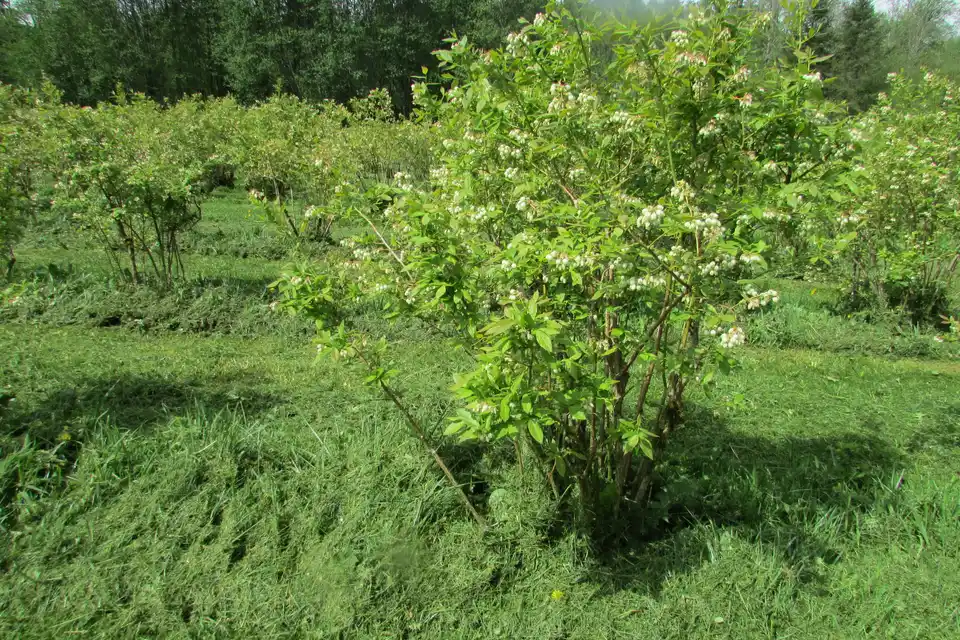
Blueberries are the fruit people most want to grow and most often fail with, and the reason is almost never the climate. It’s the soil.
The pH problem, which is the whole problem
Blueberries want soil between pH 4.5 and 5.5. A typical vegetable bed sits somewhere around 6.5 to 7. That gap doesn’t sound like much and it’s the difference between a bush that fruits for thirty years and one that goes yellow, sits still for three seasons, and dies apologetically.
The yellowing has a name, iron chlorosis: leaves going pale between green veins. It isn’t a lack of iron in the soil. It’s that above about pH 5.5 the plant can’t take iron up, whatever’s there.
Two honest options:
Give them their own bed. Not a corner of an existing one. Acidifying a shared bed means fighting the pH of everything around it, forever, and losing.
Grow them in containers. A 15-20 gallon pot of ericaceous compost is the most reliable blueberry most people will ever have, and it sidesteps the soil question entirely. This is what I’d suggest if you’re not sure.
Test the soil before you buy the plant, not after. Elemental sulphur lowers pH, but it works over months, so it has to go in the season before planting.
Plant two
Blueberries set a heavier crop with a different variety nearby for cross-pollination, and the individual berries come out bigger. For northern highbush this is a strong improvement. For rabbiteye types it isn’t optional: a single rabbiteye largely won’t fruit.
That means a blueberry is a two-plant decision and eight-plus feet of bed, which is worth knowing before you fall for one at the garden centre.
The first two years
Strip the flowers off for the first year, ideally two. Same logic as strawberries: you’re buying root system and framework rather than a handful of berries. A bush established properly then crops for decades, which makes two patient years a good trade.
What else goes wrong
Yellow leaves, green veins. pH. See above. Nothing else you do will fix it.
It dries out and sulks. Blueberries are shallow-rooted, with fine roots near the surface and no deep taproot to fall back on. They want steady moisture and a good mulch of pine bark or wood chips. They’re also sensitive to salts, so rainwater beats hard tap water where you can manage it.
Birds strip it overnight. They will. Net it before the berries turn.
No fruit despite a healthy bush. Either it’s too young, or it has no pollination partner, or you pruned it in spring. Blueberries fruit on last year’s wood, so a hard spring prune removes the crop.
Where to put it
Full sun, its own acidic bed or a large pot, and space for two. It’s not a raised-bed-with-vegetables plant, and the Garden Designer gives it a 2x2 block to reflect a mature bush rather than a single square.
Sources: Growing blueberries in the home garden, University of Minnesota Extension; Home Garden Blueberries, University of Georgia Extension.
Companion planting guide for Blueberry · Find your planting dates
Typically viable in USDA zones 3-8. Not sure your zone? Look it up by ZIP code.
Mature height: 3-6 ft
Method: Buy as a start: Buy as a nursery start and transplant outside. It's slow or unreliable from seed, so most gardeners skip seed-starting it entirely.
When to plant blueberry, by zone
Every zone blueberry grows in. Pick your zone in the header and it will be highlighted here. Each zone links to its full page.
| Zone | Start indoors | Sow or plant out | Harvest |
|---|---|---|---|
| 3a & 3b | Buy as a start | May 2–May 9 | First real harvest in year 3 |
| 4a & 4b | Buy as a start | Apr 17–Apr 24 | First real harvest in year 3 |
| 5a & 5b | Buy as a start | Apr 12–Apr 19 | First real harvest in year 3 |
| 6a & 6b | Buy as a start | Mar 28–Apr 4 | First real harvest in year 3 |
| 7a & 7b | Buy as a start | Mar 13–Mar 20 | First real harvest in year 3 |
| 8a & 8b | Buy as a start | Feb 25–Mar 4 | First real harvest in year 3 |
See exact start-indoors, direct-sow, and harvest dates for your zone →
How many Blueberry plants fit per square foot?
Spacing: about 20 square feet per plant (square-foot-gardening spacing). Mature height: 3-6 ft.
Varieties worth considering
- Northern highbush: The standard garden blueberry, hardy to roughly zone 4 and productive in 4-6 ft bushes. What most nurseries sell in the north, and what most advice assumes. (source)
- Half-high: Highbush crossed with lowbush, bred at Minnesota for cold. Shorter, around 3-4 ft, and survives where highbush dies back. The right choice in zones 3-4, where it also spends winter insulated under snow. (source)
- Rabbiteye: The southern type, zones 7-9, more heat and drought tolerant than highbush and less fussy about soil. Needs two different rabbiteye varieties to fruit at all, not just for a better crop. (source)
Why each variety is listed comes from the source shown next to it. We haven't grown these ourselves yet, so treat this as a research-backed starting point, not a personal endorsement. The buy links are separate from those sources: they go to seed suppliers that sell that exact variety, and we may earn a commission on some of them.
Where to buy blueberry starts
Blueberry is almost always bought as a nursery start rather than seeded. Check a local nursery or garden center; we haven't vetted online start/plant suppliers yet.
As an Amazon Associate we earn from qualifying purchases. Some links on this page also go to other retailers we may earn a commission from as an affiliate, at no extra cost to you. We only recommend products with a clear consensus of positive, independent reviews, or ones we bought and use ourselves. Each item on our gear page says which.
See it growing
Search YouTube for "growing blueberry" videos → (a live search, not a hand-picked video; results vary and aren't vetted by us)

Pin this for later
Growing Blueberry: Blueberries need soil at pH 4.5-5.5, which is far more acidic than a vegetable bed. That one requirement kills more home plantings than cold ever does.
Save to Pinterest