Growing Apple: A Complete Profile
By Growing Home Greens Team · August 11, 2026
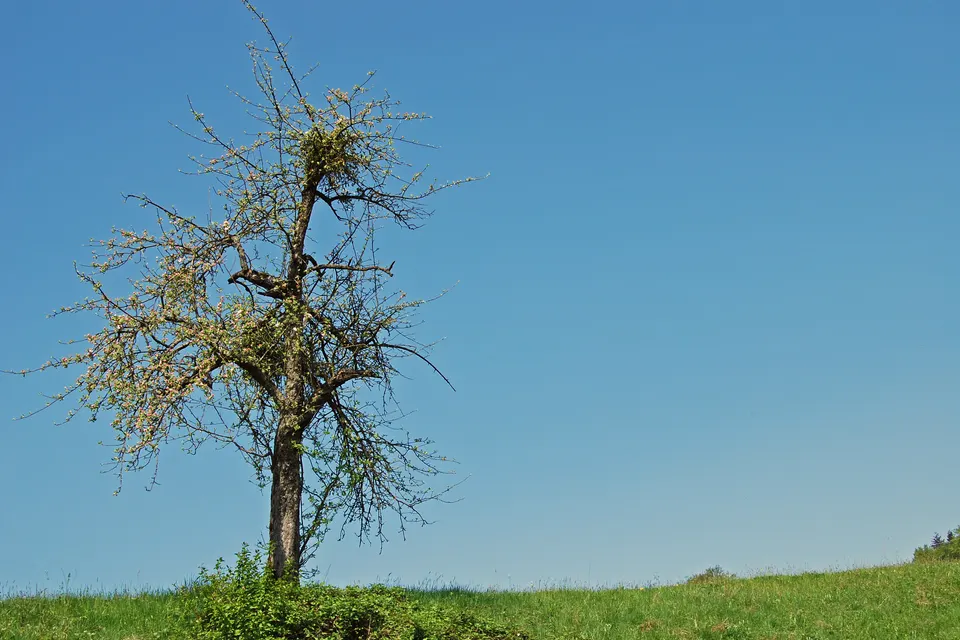
Apple trees sold by nurseries are grafted, not grown from seed, and almost every variety needs a second, different apple variety (or a compatible crabapple) blooming nearby to fruit at all. This first-pass profile covers spacing and pollination; a full grow-guide covering pruning, thinning, and disease management is planned as a follow-up.
Plant two, not one
A single apple tree, alone, typically blooms reliably and produces almost no fruit. Cross-pollination between two different varieties, blooming at the same time and within about 100 feet, is what most varieties need to set a crop. Check bloom time before pairing two varieties: an early-blooming type and a late-blooming type won’t reliably pollinate each other, while a mid-season bloomer usually works with both.
Rootstock decides the size
The variety name on the tag says what the fruit tastes like; the rootstock decides how big the tree gets. This profile is sized for semi-dwarf rootstock, roughly 15-18 feet at maturity, which bears in 3-5 years and stays manageable without a ladder. Dwarf rootstock bears sooner and stays smaller but needs permanent staking; standard rootstock grows to 40 feet and outlives either, at the cost of years before a real harvest.
Chill hours vary by variety
Chilling requirement (hours between 32-45°F needed to break dormancy) varies widely between apple varieties, commonly 500-1000 hours. A variety mismatched to the local average chill hours blooms erratically even in a hardiness zone it’s otherwise rated for, so check this alongside zone rather than relying on zone alone.
Apple has no well-established companion pairings, and nothing it needs to be kept away from. The Garden Designer can place it, but a full-size apple tree needs more room than a garden-bed grid shows, so plan its spot in the yard separately.
Source: Apple Production and Variety Recommendations for the Utah Home Garden, Utah State University Extension.
Companion planting guide for Apple · Find your planting dates
Typically viable in USDA zones 3-8. Not sure your zone? Look it up by ZIP code.
Mature height: 15-20 ft
Method: Buy as a start: Buy as a nursery start and transplant outside. It's slow or unreliable from seed, so most gardeners skip seed-starting it entirely.
When to plant apple, by zone
Every zone apple grows in. Pick your zone in the header and it will be highlighted here. Each zone links to its full page.
| Zone | Start indoors | Sow or plant out | Harvest |
|---|---|---|---|
| 3a & 3b | Buy as a start | May 16–May 23 | First real harvest in year 4 |
| 4a & 4b | Buy as a start | May 1–May 8 | First real harvest in year 4 |
| 5a & 5b | Buy as a start | Apr 26–May 3 | First real harvest in year 4 |
| 6a & 6b | Buy as a start | Apr 11–Apr 18 | First real harvest in year 4 |
| 7a & 7b | Buy as a start | Mar 27–Apr 3 | First real harvest in year 4 |
| 8a & 8b | Buy as a start | Mar 11–Mar 18 | First real harvest in year 4 |
See exact start-indoors, direct-sow, and harvest dates for your zone →
How many Apple plants fit per square foot?
Spacing: about 50 square feet per plant (square-foot-gardening spacing). Mature height: 15-20 ft.
Varieties worth considering
- 'Zestar™' apple (best for: cold climates, early ripening): Utah State University Extension lists this as ripening early with a crisper texture than most summer apples, very resistant to fire blight, and better suited to colder climates (hardy to zone 3) than most named varieties. (source)
- 'Honeycrisp' apple (best for: fresh eating, texture): Stark Bro's Nursery describes Honeycrisp as one of the most sought-after apple varieties in America, prized for an explosively crisp, juicy texture from a unique cell structure. Hardy zones 3-8 and naturally compact, a strong default pick where flavor and texture matter more than disease resistance. (source)
- 'GoldRush' apple (best for: disease resistance, storage): Stark Bro's Nursery lists GoldRush as immune to apple scab and highly resistant to powdery mildew, developed through the Purdue-Rutgers-Illinois breeding program specifically for organic and low-spray home orchards. Tart at harvest, it develops a richer, spiced flavor after storage. (source)
Why each variety is listed comes from the source shown next to it. We haven't grown these ourselves yet, so treat this as a research-backed starting point, not a personal endorsement. The buy links are separate from those sources: they go to seed suppliers that sell that exact variety, and we may earn a commission on some of them.
Where to buy apple starts
Apple is almost always bought as a nursery start rather than seeded. Check a local nursery or garden center; we haven't vetted online start/plant suppliers yet.
As an Amazon Associate we earn from qualifying purchases. Some links on this page also go to other retailers we may earn a commission from as an affiliate, at no extra cost to you. We only recommend products with a clear consensus of positive, independent reviews, or ones we bought and use ourselves. Each item on our gear page says which.
See it growing
Search YouTube for "growing apple" videos → (a live search, not a hand-picked video; results vary and aren't vetted by us)

Pin this for later
Growing Apple: A grafted tree, not a seed-grown one, that needs a second variety nearby to fruit at all. First-pass data for the home orchard, spacing and pollination before the full grow-guide detail.
Save to Pinterest