Growing Anise Hyssop: A Complete Profile
By Growing Home Greens Team · July 25, 2026
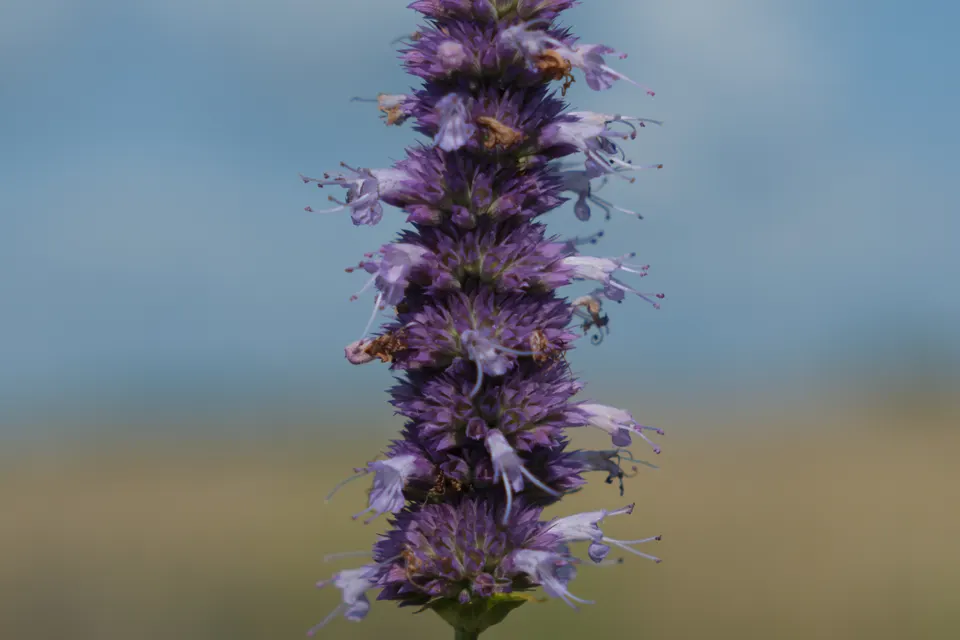
Anise hyssop is a perennial herb in the mint family with a distinctive licorice-mint flavor, grown for its edible leaves and flower spikes as much as for the bees and butterflies it attracts.
Sowing and starting it
Start seed indoors about 6 weeks before your last frost date and transplant around that date. Transplanting is the preferred method, though it can also be direct-sown 1/4 inch deep in spring. Unusually for a perennial, it typically flowers in its first year, reaching harvestable size around 75-80 days from seeding. It’s hardy in zones 5-9.
Seed-grown plants are the straight species and will self-seed a bit; if you want a longer bloom season without the volunteers, buy ‘Blue Fortune’ as a plant instead, it’s sterile and won’t set seed.
Root rot in wet soil is the main risk
Anise hyssop is low-maintenance in the conditions it likes: full sun and well-drained soil. Root rot in heavy, wet soil is the main thing to watch for; it doesn’t tolerate standing water.
A permanent bee plant, not an annual rotation
As a perennial, give anise hyssop a permanent spot rather than rotating it through the annual vegetable beds, a herb border or pollinator strip suits it well, and its long bloom period makes it one of the more dependable season-long bee plants you can grow.
Sources: Anise Hyssop, Johnny’s Selected Seeds; Agastache ‘Blue Fortune’, NC State Extension Gardener Plant Toolbox; Plants for Pollinators: Giant Hyssop, Xerces Society.
Companion planting guide for Anise Hyssop · Find your planting dates
Typically viable in USDA zones 5-9. Not sure your zone? Look it up by ZIP code.
Mature height: 2-3 ft
Method: Either: Start indoors for an earlier harvest, or direct-sow outside for less fuss. Either works.
When to plant anise hyssop, by zone
Every zone anise hyssop grows in. Pick your zone in the header and it will be highlighted here. Each zone links to its full page.
| Zone | Start indoors | Sow or plant out | Harvest |
|---|---|---|---|
| 5a & 5b | Mar 29–Apr 5 | May 10–May 17 | Jul 27–Aug 3 |
| 6a & 6b | Mar 14–Mar 21 | Apr 25–May 2 | Jul 12–Jul 19 |
| 7a & 7b | Feb 27–Mar 6 | Apr 10–Apr 17 | Jun 27–Jul 4 |
| 8a & 8b | Feb 11–Feb 18 | Mar 25–Apr 1 | Jun 11–Jun 18 |
| 9a & 9b | Jan 4–Jan 11 | Feb 15–Feb 22 | May 4–May 11 |
Harvest dates are about 78 days after the sow or plant-out date, not after starting seeds indoors.
See exact start-indoors, direct-sow, and harvest dates for your zone →
How many Anise Hyssop plants fit per square foot?
Spacing: 1 per square foot (square-foot-gardening spacing). Mature height: 2-3 ft.
Varieties worth considering
- 'Blue Fortune' (Agastache foeniculum x A. rugosa): Sold as a nursery plant rather than seed, it's a cross between the native species and Korean Agastache rugosa, bred for a longer summer-through-fall bloom window than seed-grown plants give you. Mt. Cuba Center's pollinator trial found it drew bees and other pollinators just as well as the straight species, so you're not trading pollinator value for the extra bloom time. (source)
- 'Blue Blazes': NC State Extension's Plant Toolbox lists this as another named cultivar, purple-lavender flowers, alongside Blue Fortune and Golden Jubilee. A reasonable second seed-grown option if you want a named cultivar without the Blue Fortune cross's nursery-only availability. (source)
- 'Golden Jubilee' (avoid for pollinators): An AAS-winning cultivar with gold-chartreuse foliage that NC State also lists, but the Xerces Society explicitly warns against it for pollinator gardens: its flowers have been found to go unnoticed by bees, unlike Blue Fortune or the straight species. Grow it for the foliage color if that's the goal, not for the bees. (source)
Why each variety is listed comes from the source shown next to it. We haven't grown these ourselves yet, so treat this as a research-backed starting point, not a personal endorsement. The buy links are separate from those sources: they go to seed suppliers that sell that exact variety, and we may earn a commission on some of them.
Where to buy anise hyssop seeds
Botanical Interests (anise hyssop seeds)
As an Amazon Associate we earn from qualifying purchases. Some links on this page also go to other retailers we may earn a commission from as an affiliate, at no extra cost to you. We only recommend products with a clear consensus of positive, independent reviews, or ones we bought and use ourselves. Each item on our gear page says which.
See it growing
Search YouTube for "growing anise hyssop" videos → (a live search, not a hand-picked video; results vary and aren't vetted by us)

Pin this for later
Growing Anise Hyssop: A licorice-mint-flavored perennial that flowers its first year and draws pollinators all season long.
Save to Pinterest