Growing Angelica: A Complete Profile
By Growing Home Greens Team · August 10, 2026
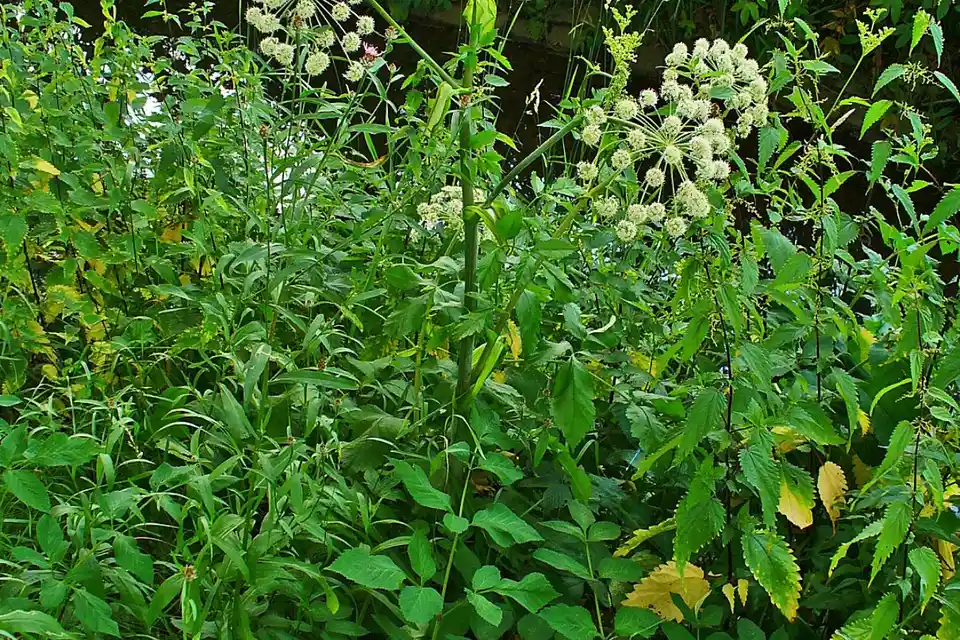
Angelica is a dramatic plant for an herb bed, a biennial that can reach 6 to 8 feet tall in its second year, with huge compound leaves and umbrella-shaped flower heads. Historically its candied stems were a fixture of cake decoration, the green, sugar-crusted strips sometimes still found on old-fashioned fruitcake.
Seed that needs to be tricked into sprouting
Angelica seed is difficult to start from scratch: it needs refrigeration before sowing and then alternating warm and cold temperatures to germinate at all, taking about 30 days even under good conditions. Fall planting is preferred over spring for this reason, since it lets the seed experience a natural cold period in the ground. For a spring start, sow 1/4 to 3/8 inch deep, keep flats outdoors for 21 days, then move them somewhere warmer to finish germinating.
A two-year plant that needs the room
As a biennial, angelica spends its first year building size before flowering in its second summer, hardy through zones 4-9. Space plants 12 to 24 inches apart, and plan for its eventual 6-to-8-foot height when picking a spot; this isn’t a plant that fits quietly into a small bed.
Harvest carefully in year one
Leaves can be harvested in the first year, but carefully, since damaging the main stem can set the whole plant back. Roots, if that’s the harvest goal, are dug in fall of the first year or spring of the second, before the plant puts its energy into flowering.
Angelica has no well-established companion pairings, and nothing it needs to be kept away from. Its eventual size means it needs the Garden Designer’s north edge or a dedicated corner, not a spot among shorter plants it will shade out.
Source: Angelica: Key Growing Information, Johnny’s Selected Seeds.
Companion planting guide for Angelica · Find your planting dates
Typically viable in USDA zones 4-9. Not sure your zone? Look it up by ZIP code.
Mature height: 6-8 ft
Method: Direct sow: Direct-sow outside. It doesn't transplant well, or doesn't need the extra time indoors.
When to plant angelica, by zone
Every zone angelica grows in. Pick your zone in the header and it will be highlighted here. Each zone links to its full page.
| Zone | Start indoors | Sow or plant out | Harvest |
|---|---|---|---|
| 4a & 4b | Not usually | Apr 24–May 1 | About a year after planting |
| 5a & 5b | Not usually | Apr 19–Apr 26 | About a year after planting |
| 6a & 6b | Not usually | Apr 4–Apr 11 | About a year after planting |
| 7a & 7b | Not usually | Mar 20–Mar 27 | About a year after planting |
| 8a & 8b | Not usually | Mar 4–Mar 11 | About a year after planting |
| 9a & 9b | Not usually | Jan 25–Feb 1 | About a year after planting |
See exact start-indoors, direct-sow, and harvest dates for your zone →
How many Angelica plants fit per square foot?
Spacing: about 2 square feet per plant (square-foot-gardening spacing). Mature height: 6-8 ft.
Varieties worth considering
- Straight-species angelica (Angelica archangelica): Johnny's Selected Seeds sells it as the plain species; there's no meaningful named-cultivar market for a plant grown mostly for its dramatic size and traditional candied stems rather than as a kitchen staple. (source)
Why each variety is listed comes from the source shown next to it. We haven't grown these ourselves yet, so treat this as a research-backed starting point, not a personal endorsement. The buy links are separate from those sources: they go to seed suppliers that sell that exact variety, and we may earn a commission on some of them.
Where to buy angelica seeds
True Leaf Market (each supplier's angelica seeds)
As an Amazon Associate we earn from qualifying purchases. Some links on this page also go to other retailers we may earn a commission from as an affiliate, at no extra cost to you. We only recommend products with a clear consensus of positive, independent reviews, or ones we bought and use ourselves. Each item on our gear page says which.
See it growing
Search YouTube for "growing angelica" videos → (a live search, not a hand-picked video; results vary and aren't vetted by us)

Pin this for later
Growing Angelica: A dramatic, 6-to-8-foot biennial whose candied stems are a traditional cake decoration, and whose seed needs a genuine cold spell to sprout at all.
Save to Pinterest