Growing Amaranthus (Love-Lies-Bleeding): A Complete Profile
By Growing Home Greens Team · August 10, 2026
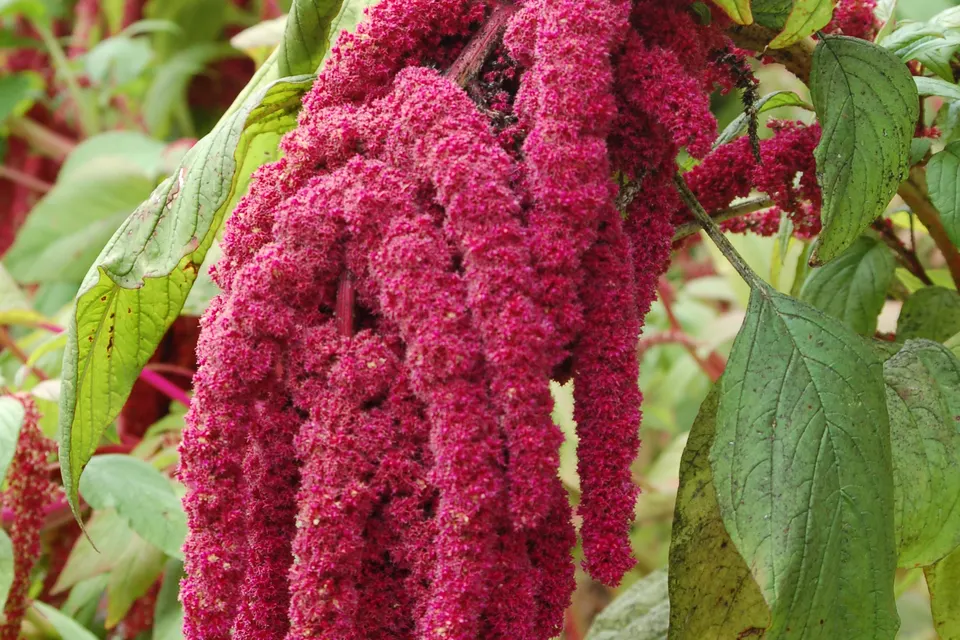
Amaranthus is an ornamental relative of the vegetable amaranths, grown not for its leaves but for its long, rope-like tassels of tiny flowers, deep red in the classic “love-lies-bleeding” form that gives the plant its common name.
Keep the transplants cool
Germination takes 7 to 10 days at 70-75°F, but once seedlings are up, grow them cool, around 62-65°F, rather than warm. Warm conditions push soft, leggy growth that doesn’t hold up once the plant is outside. Transplant 4 to 6 weeks before your last frost, or direct-seed after frost danger has passed. Space plants 12 to 15 inches apart, tighter at 3 to 6 inches for a row of thinner, more upright stems.
Two harvest points
For fresh arrangements, cut once about three-quarters of the flowers on a tassel have opened. For dried arrangements, wait longer, until the seed has set and the flowers feel firm rather than soft to the touch; cutting too early leaves them limp as they dry.
Amaranthus has no well-established companion pairings, and nothing it needs to be kept away from. Its height and dramatic form make it a good back-row anchor in the Garden Designer, planned alongside shorter cut-flower rows in front.
Source: Amaranthus: Key Growing Information, Johnny’s Selected Seeds.
Companion planting guide for Amaranthus (Love-Lies-Bleeding) · Find your planting dates
Typically viable in USDA zones 2-11. Not sure your zone? Look it up by ZIP code.
Mature height: 3-5 ft
Method: Either: Start indoors for an earlier harvest, or direct-sow outside for less fuss. Either works.
When to plant amaranthus (love-lies-bleeding), by zone
Every zone amaranthus (love-lies-bleeding) grows in. Pick your zone in the header and it will be highlighted here. Each zone links to its full page.
| Zone | Start indoors | Sow or plant out | Bloom |
|---|---|---|---|
| 2a & 2b | Apr 15–Apr 22 | May 20–May 27 | Aug 18–Aug 25 |
| 3a & 3b | Apr 25–May 2 | May 30–Jun 6 | Aug 28–Sep 4 |
| 4a & 4b | Apr 10–Apr 17 | May 15–May 22 | Aug 13–Aug 20 |
| 5a & 5b | Apr 5–Apr 12 | May 10–May 17 | Aug 8–Aug 15 |
| 6a & 6b | Mar 21–Mar 28 | Apr 25–May 2 | Jul 24–Jul 31 |
| 7a & 7b | Mar 6–Mar 13 | Apr 10–Apr 17 | Jul 9–Jul 16 |
| 8a & 8b | Feb 18–Feb 25 | Mar 25–Apr 1 | Jun 23–Jun 30 |
| 9a & 9b | Jan 11–Jan 18 | Feb 15–Feb 22 | May 16–May 23 |
| 10a & 10b | Dec 26–Jan 2 | Jan 30–Feb 6 | Apr 30–May 7 |
| 11a & 11b | Nov 27–Dec 4 | Jan 1–Jan 8 | Apr 1–Apr 8 |
Bloom dates are about 90 days after the sow or plant-out date, not after starting seeds indoors.
Zone 2 sows before zone 3 here, which looks wrong and is not. USDA zones rank winter cold, not season length, and zone 2 is mostly interior Alaska, where hard winters come with warm summers. More on what a zone measures.
See exact start-indoors, direct-sow, and harvest dates for your zone →
How many Amaranthus (Love-Lies-Bleeding) plants fit per square foot?
Spacing: 1 per square foot (square-foot-gardening spacing). Mature height: 3-5 ft.
Varieties worth considering
- 'Love-Lies-Bleeding' amaranthus: Johnny's Selected Seeds sells Amaranthus caudatus under this name for its classic long, drooping, deep-red tassels, a Victorian-era garden favorite and their main offering of this particular species. (source) Buy seeds: True Leaf Market · Burpee
Why each variety is listed comes from the source shown next to it. We haven't grown these ourselves yet, so treat this as a research-backed starting point, not a personal endorsement. The buy links are separate from those sources: they go to seed suppliers that sell that exact variety, and we may earn a commission on some of them.
Where to buy amaranthus seeds
True Leaf Market · Burpee (each supplier's amaranthus seeds)
The varieties we recommend above each have their own buy links, for the suppliers that sell that exact variety.
As an Amazon Associate we earn from qualifying purchases. Some links on this page also go to other retailers we may earn a commission from as an affiliate, at no extra cost to you. We only recommend products with a clear consensus of positive, independent reviews, or ones we bought and use ourselves. Each item on our gear page says which.
See it growing
Search YouTube for "growing amaranthus (love-lies-bleeding)" videos → (a live search, not a hand-picked video; results vary and aren't vetted by us)
%3A%20An%20ornamental%20grain-family%20relative%20of%20vegetable%20amaranth%2C%20grown%20for%20its%20long%2C%20dramatic%20tassels%20of%20deep%20red%20flowers%20rather%20than%20for%20eating.)
Pin this for later
Growing Amaranthus (Love-Lies-Bleeding): An ornamental grain-family relative of vegetable amaranth, grown for its long, dramatic tassels of deep red flowers rather than for eating.
Save to Pinterest