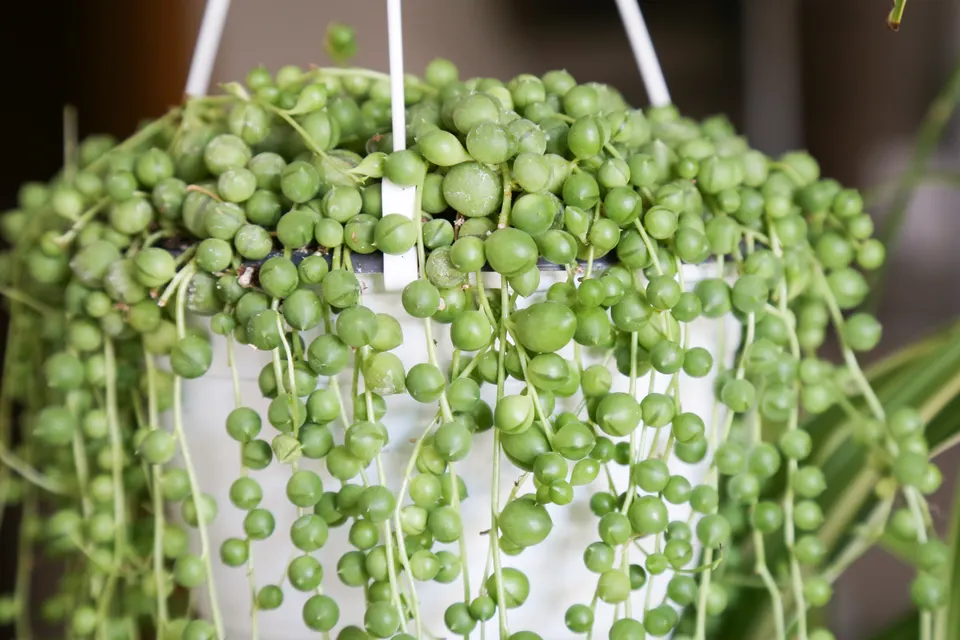
String of Pearls
Curio rowleyanus, also called Senecio rowleyanus
- Light
- Bright, indirect light. Best spot: close to a bright window but out of the sun's direct rays.
- Water
- Water when the top of the mix is dry
- Humidity
- Fine in ordinary indoor air
- Potting mix
- A fast-draining cactus and succulent mix
- Size
- Trails 1 to 3 feet
- Pets
- Keep away from pets
How to care for a string of pearls
A trailing succulent with bead-like leaves, made for a hanging basket. Indoors it wants bright, indirect light; direct sun scorches it. Use a cactus mix or potting soil cut with sand or perlite. It tolerates infrequent watering, but don't let it dry out completely, and don't overwater. It likes 70 to 80°F in summer and a cooler 50 to 60°F in winter. Plants tend to die back after several years; start fresh from 3 to 5 inch stem cuttings rather than trying to revive an old one.
Common problems
Fussy about its conditions: soggy soil kills it through root rot, and both over- and underwatering make the strands wilt. Aphids, whiteflies, gnats, ants and mealybugs; yellow or gray beads can point to insects.
Questions people ask
How much light does a string of pearls need?
Bright, indirect light. Best spot: close to a bright window but out of the sun's direct rays.
How often should I water a string of pearls?
Water when the top of the mix is dry.
Is string of pearls toxic to cats and dogs?
Treat it as unsafe. Not on the ASPCA list. NC State says it is toxic to people and pets: eating the leaves causes vomiting and diarrhea, and the sap irritates skin.
Sources
As an Amazon Associate we earn from qualifying purchases. Some links on this page also go to other retailers we may earn a commission from as an affiliate, at no extra cost to you. We only recommend products with a clear consensus of positive, independent reviews, or ones we bought and use ourselves. Each item on our gear page says which.