Rubber Plant
Ficus elastica
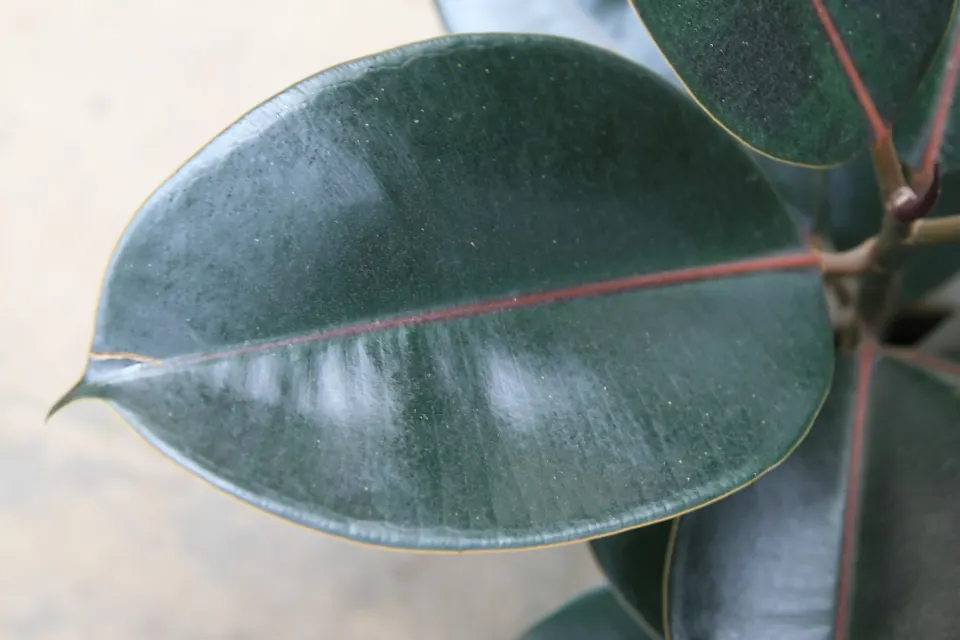
- Light
- Medium light to bright, indirect light. Best spot: close to a bright window but out of the sun's direct rays.
- Water
- Water when the top of the mix is dry
- Humidity
- Fine in ordinary indoor air
- Temperature
- Keep it above 55°F
- Potting mix
- An indoor potting mix with good drainage
- Size
- Usually kept to 2 to 10 feet indoors
- Pets
- Keep away from pets
How to care for a rubber plant
Grow it in a soil-based mix in bright, indirect light, sheltered from afternoon sun, with medium humidity and temperatures above 55°F. Water regularly but don't overwater, and cut back hard from fall to late winter while it rests. It does not like being moved or sitting in a draft. Prune the main stems for a bushier plant, or leave them for a tall, narrow tree. Wipe the big leaves with a damp cloth.
Common problems
Overwatering, sudden cold and drafts all make it drop leaves; losing a few bottom leaves is normal. Mealybugs, scale and spider mites can be a problem.
Questions people ask
How much light does a rubber plant need?
Medium light to bright, indirect light. Best spot: close to a bright window but out of the sun's direct rays.
How often should I water a rubber plant?
Water when the top of the mix is dry.
Is rubber plant toxic to cats and dogs?
Treat it as unsafe. Not on the ASPCA list under this species. The ASPCA lists the related weeping fig (Ficus benjamina) as toxic to dogs and cats, and cut rubber plant leaves drip milky sap, so keep it away from pets that chew.
Sources
- NC State Extension Plant Toolbox: Ficus elastica
- ASPCA Animal Poison Control: Indian Rubber Plant (Ficus benjamina)
As an Amazon Associate we earn from qualifying purchases. Some links on this page also go to other retailers we may earn a commission from as an affiliate, at no extra cost to you. We only recommend products with a clear consensus of positive, independent reviews, or ones we bought and use ourselves. Each item on our gear page says which.