Prayer Plant
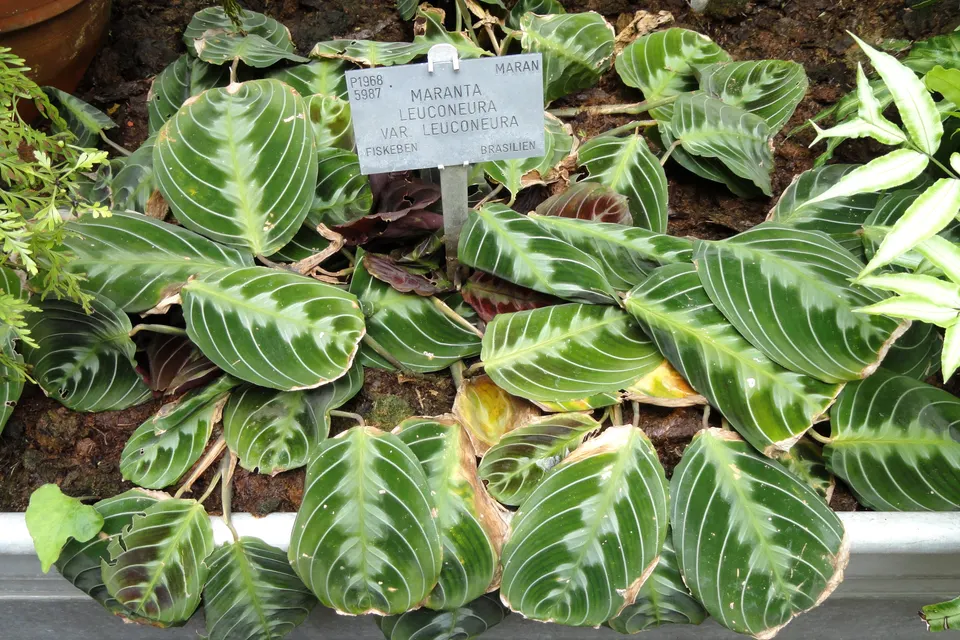
Maranta leuconeura
- Light
- Low light to bright, indirect light. Best spot: close to a bright window but out of the sun's direct rays.
- Water
- Keep evenly moist, never soggy
- Humidity
- Needs extra humidity
- Potting mix
- An indoor potting mix with good drainage
- Pets
- Non-toxic (ASPCA)
How to care for a prayer plant
Grown for its patterned leaves, which lie flat by day and fold upright at night. Bright, indirect light is best; it tolerates low to medium light, but direct sun bleaches the color. Keep the mix evenly moist through the growing season and let it dry out more in winter. It needs high humidity, so a humidified room or a pebble tray, and it dislikes cold and drafts. Divide it to propagate.
Common problems
No serious pest or disease problems; occasional spider mites and mealybugs. Poorly drained soil leads to root rot. Fluoride in water and overfeeding burn the leaves.
Questions people ask
How much light does a prayer plant need?
Low light to bright, indirect light. Best spot: close to a bright window but out of the sun's direct rays.
How often should I water a prayer plant?
Keep evenly moist, never soggy.
Is prayer plant toxic to cats and dogs?
No. Non-toxic to dogs, cats and horses. The ASPCA files its Prayer Plant entry under Calathea insignis, with Maranta as an alternate name.
Sources
As an Amazon Associate we earn from qualifying purchases. Some links on this page also go to other retailers we may earn a commission from as an affiliate, at no extra cost to you. We only recommend products with a clear consensus of positive, independent reviews, or ones we bought and use ourselves. Each item on our gear page says which.