Pothos
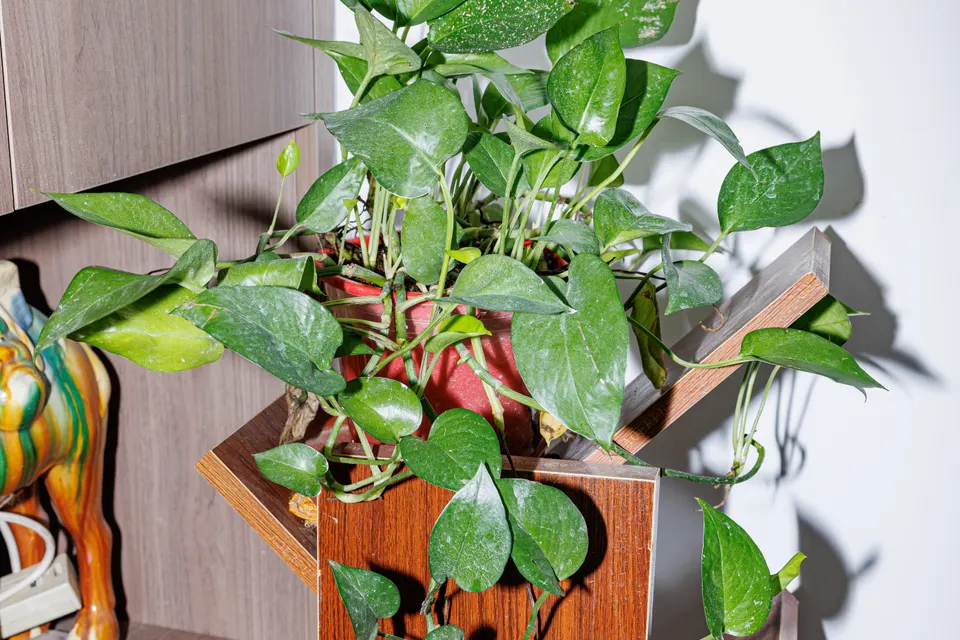
Epipremnum aureum, also called Golden pothos, Devil's ivy
- Light
- Low light to bright, indirect light. Best spot: close to a bright window but out of the sun's direct rays.
- Water
- Let it dry out between waterings
- Humidity
- Does better with extra humidity
- Potting mix
- An indoor potting mix with good drainage
- Size
- Trailing vines; easily kept to a hanging basket with pruning
- Pets
- Toxic to pets
How to care for a pothos
One of the easiest houseplants there is. It does best in bright, indirect light and survives a long time in low light, though variegated leaves fade toward plain green there. Let the mix dry out between waterings, and feed every other month except in winter. Older leaves yellow and drop, which leaves foliage bunched at the stem ends, so prune stems back to keep it full. Cuttings root easily in a glass of water.
Common problems
Overwatering causes root rot and blackened leaf edges. Low light costs it its variegation. Watch for mealybugs and scale.
Questions people ask
How much light does a pothos need?
Low light to bright, indirect light. Best spot: close to a bright window but out of the sun's direct rays.
How often should I water a pothos?
Let it dry out between waterings.
Is pothos toxic to cats and dogs?
Yes. Toxic to dogs and cats. Its insoluble calcium oxalate crystals cause intense mouth irritation, drooling, vomiting and trouble swallowing.
Sources
As an Amazon Associate we earn from qualifying purchases. Some links on this page also go to other retailers we may earn a commission from as an affiliate, at no extra cost to you. We only recommend products with a clear consensus of positive, independent reviews, or ones we bought and use ourselves. Each item on our gear page says which.