Parlor Palm
Chamaedorea elegans
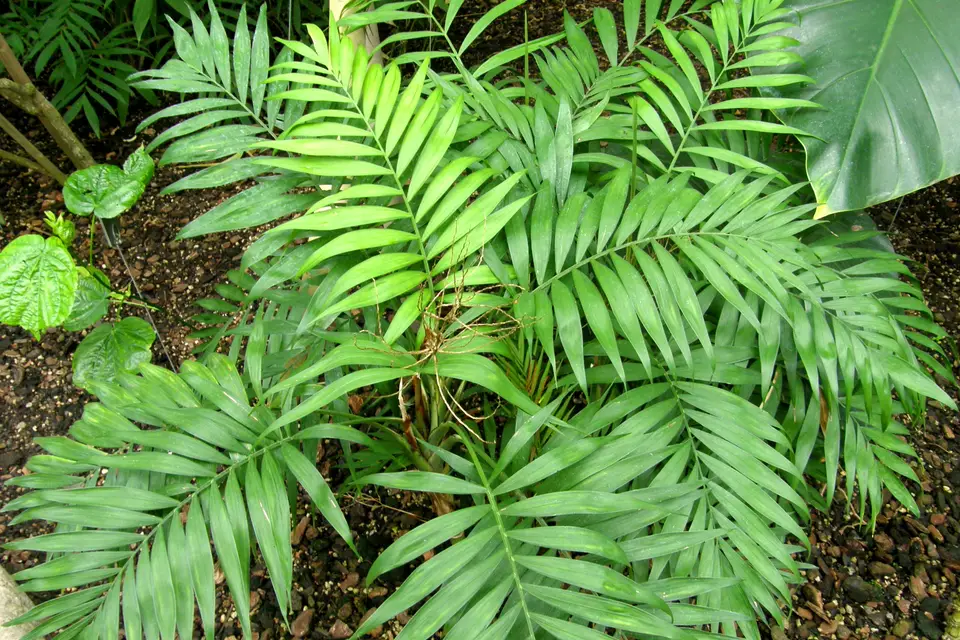
- Light
- Low light to bright, indirect light. Best spot: close to a bright window but out of the sun's direct rays.
- Water
- Water when the top of the mix is dry
- Humidity
- Fine in ordinary indoor air
- Potting mix
- An indoor potting mix with good drainage
- Size
- Usually under 5 feet indoors
- Pets
- Non-toxic (ASPCA)
How to care for a parlor palm
One of the most sought-after indoor palms because it handles dry air and dim light. Bright, indirect light from a north or east window suits it best, but it tolerates low light. Plant in a humus-rich mix with good drainage and let the soil dry slightly between waterings; it survives short dry spells but grows lusher kept moist. Feed in the growing season, not in winter. Keep it out of cold drafts, and repot only every other year or so.
Common problems
Overwatering. Red spider mites and mealybugs; misting and wiping the fronds with a damp cloth help prevent or clear them.
Questions people ask
How much light does a parlor palm need?
Low light to bright, indirect light. Best spot: close to a bright window but out of the sun's direct rays.
How often should I water a parlor palm?
Water when the top of the mix is dry.
Is parlor palm toxic to cats and dogs?
No. Non-toxic to dogs and cats. NC State notes the rare fruit's pulp can irritate sensitive skin.
Sources
As an Amazon Associate we earn from qualifying purchases. Some links on this page also go to other retailers we may earn a commission from as an affiliate, at no extra cost to you. We only recommend products with a clear consensus of positive, independent reviews, or ones we bought and use ourselves. Each item on our gear page says which.