Moth Orchid
Phalaenopsis
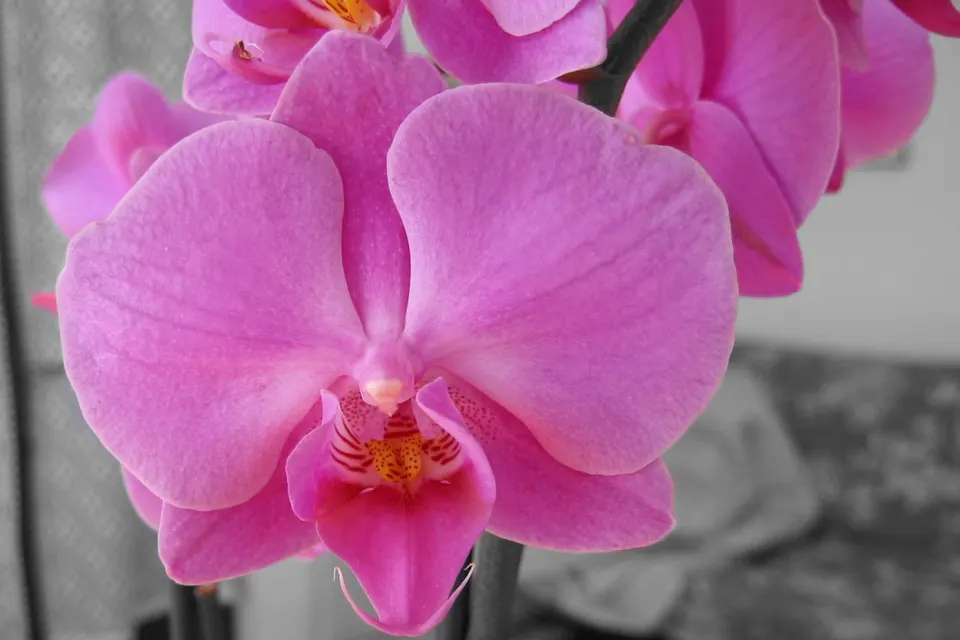
- Light
- Low light to medium light. Best spot: an east window, or a few feet back from a south or west one.
- Water
- Water when the top of the mix is dry
- Humidity
- Does better with extra humidity
- Potting mix
- A chunky bark or orchid/violet mix, not regular potting soil
- Size
- A few inches to 2 feet
- Pets
- Non-toxic (ASPCA)
How to care for a moth orchid
The most common orchid sold as a houseplant. It likes low light, warmth and humidity, and does best on an east windowsill. Grow it in a bark-based orchid mix, not plain potting soil. Water in the morning with lukewarm water: run it through the pot in the sink, let it drain completely, and let the mix dry somewhat before the next watering, about weekly. Feed twice a month at half strength. After the flowers fade, cut the stalk just above the first node below them; it often branches and blooms again. Repot about every two years. Large white spring-blooming types need about a week of 55°F nights in autumn to set flower spikes.
Common problems
Pure sphagnum moss is hard to rewet; repot into bark mix. Never let the pot sit in water.
Questions people ask
How much light does a moth orchid need?
Low light to medium light. Best spot: an east window, or a few feet back from a south or west one.
How often should I water a moth orchid?
Water when the top of the mix is dry.
Is moth orchid toxic to cats and dogs?
No. Non-toxic to dogs, cats and horses.
Sources
As an Amazon Associate we earn from qualifying purchases. Some links on this page also go to other retailers we may earn a commission from as an affiliate, at no extra cost to you. We only recommend products with a clear consensus of positive, independent reviews, or ones we bought and use ourselves. Each item on our gear page says which.