Dumb Cane
Dieffenbachia seguine, also called Dieffenbachia
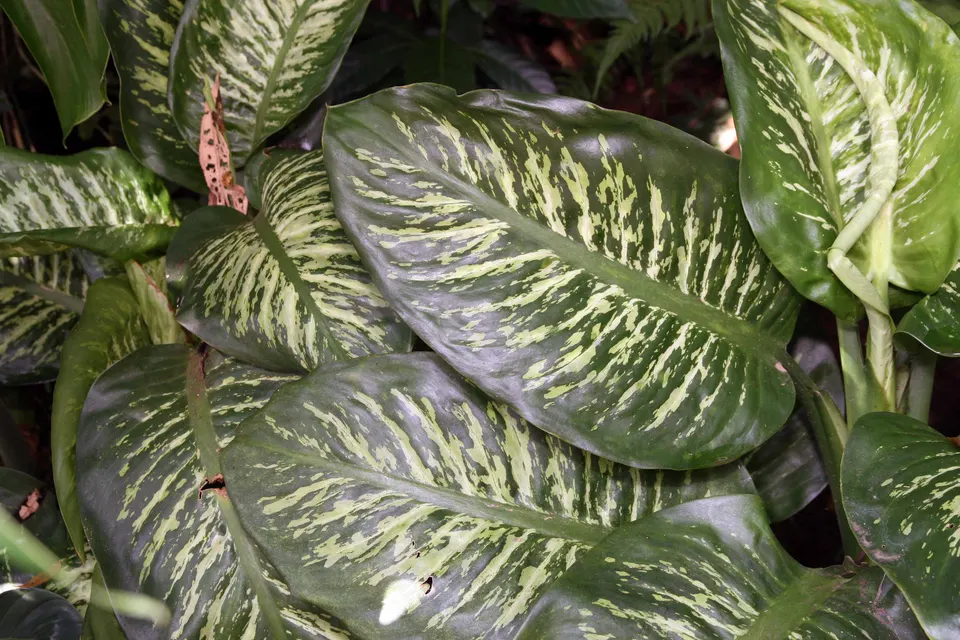
- Light
- Medium light to bright, indirect light. Best spot: close to a bright window but out of the sun's direct rays.
- Water
- Water when the top of the mix is dry
- Humidity
- Does better with extra humidity
- Potting mix
- An indoor potting mix with good drainage
- Size
- 3 to 8 feet tall, 2 to 3 feet wide
- Pets
- Toxic to pets
How to care for a dumb cane
Loose, fertile, organic soil, indirect light, moderate temperatures and high humidity. Water thoroughly, then let the top inch of soil dry before watering again, which prevents root rot. Keep it out of cold drafts and direct sun. Propagate by division or cuttings. Wear gloves to handle it and wash your hands afterward: the sap irritates skin and can damage eyes. The common name comes from the sap numbing the mouth and throat.
Common problems
Spider mites, scale, whiteflies, fungus gnats and aphids. Fungal leaf spot, root rot and blight are possible.
Questions people ask
How much light does a dumb cane need?
Medium light to bright, indirect light. Best spot: close to a bright window but out of the sun's direct rays.
How often should I water a dumb cane?
Water when the top of the mix is dry.
Is dumb cane toxic to cats and dogs?
Yes. Toxic to dogs and cats: intense mouth irritation, drooling, vomiting and trouble swallowing. NC State rates its poison severity high and says it may be fatal to pets.
Sources
As an Amazon Associate we earn from qualifying purchases. Some links on this page also go to other retailers we may earn a commission from as an affiliate, at no extra cost to you. We only recommend products with a clear consensus of positive, independent reviews, or ones we bought and use ourselves. Each item on our gear page says which.