Croton
Codiaeum variegatum
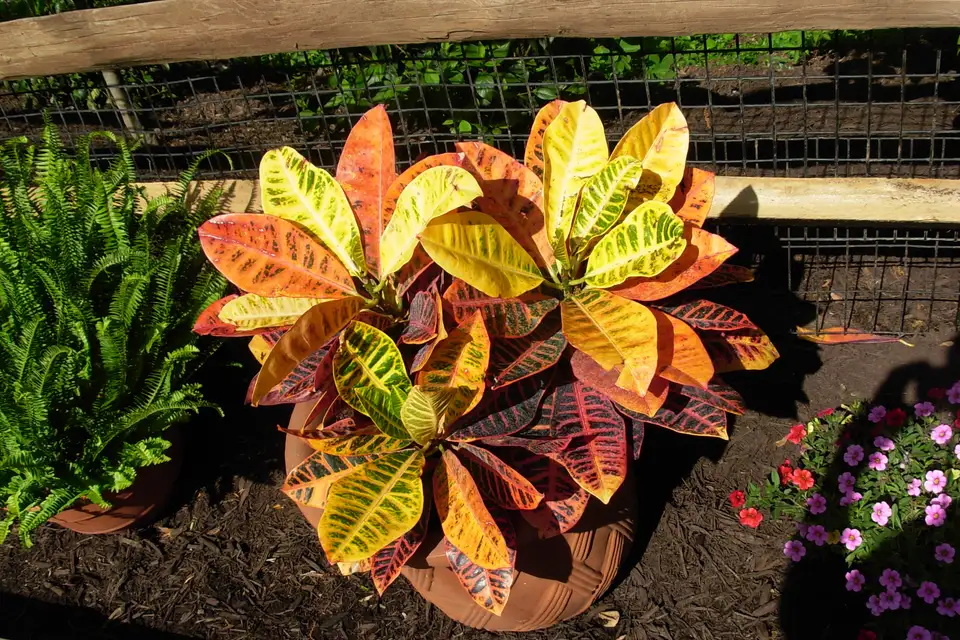
- Light
- Bright, indirect light to some direct sun. Best spot: a south or west window.
- Water
- Water when the top of the mix is dry
- Humidity
- Fine in ordinary indoor air
- Temperature
- Keep it above 50°F
- Potting mix
- An indoor potting mix with good drainage
- Size
- About 3 feet indoors
- Pets
- Keep away from pets
How to care for a croton
Grown for its brightly variegated leaves, which need bright light with some direct sun to keep their color; in too much shade it drops lower leaves. Use a well-drained, rich mix. Water liberally from spring to autumn and sparingly from fall to late winter, letting it dry a little in between. A pebble tray helps with humidity. It can summer outdoors; bring it in before temperatures reach 50°F.
Common problems
Spider mites are the big one. The sap from cut stems irritates skin and eyes and permanently stains fabric, so wash your hands after handling it.
Questions people ask
How much light does a croton need?
Bright, indirect light to some direct sun. Best spot: a south or west window.
How often should I water a croton?
Water when the top of the mix is dry.
Is croton toxic to cats and dogs?
Treat it as unsafe. Not on the ASPCA list. NC State rates it low toxicity: nausea, vomiting and diarrhea if eaten, and the clear sap irritates skin and eyes.
Sources
As an Amazon Associate we earn from qualifying purchases. Some links on this page also go to other retailers we may earn a commission from as an affiliate, at no extra cost to you. We only recommend products with a clear consensus of positive, independent reviews, or ones we bought and use ourselves. Each item on our gear page says which.