Calathea
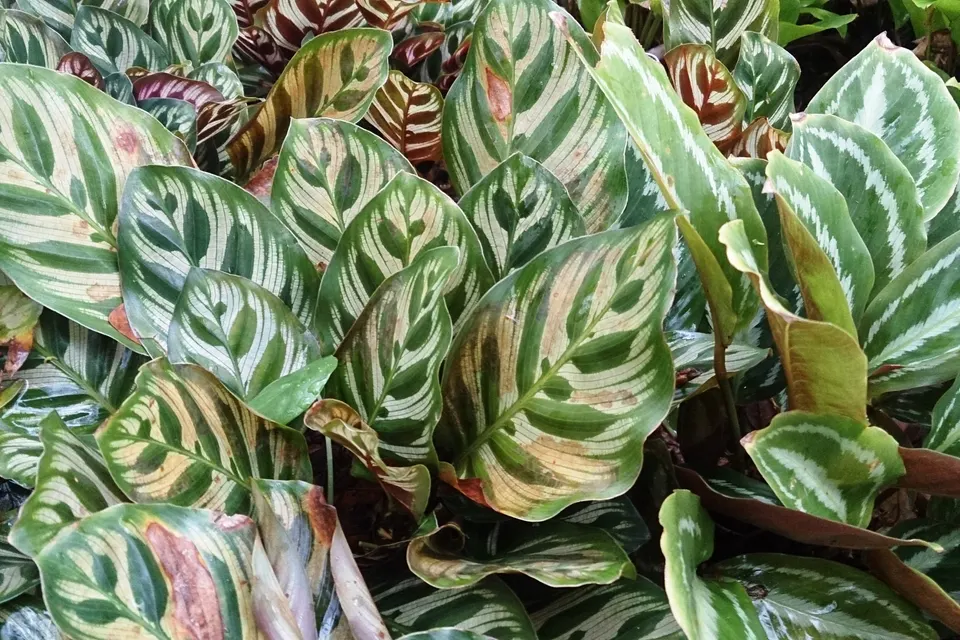
Goeppertia makoyana, also called Peacock plant, Calathea makoyana
- Light
- Medium light to bright, indirect light. Best spot: close to a bright window but out of the sun's direct rays.
- Water
- Keep evenly moist, never soggy
- Humidity
- Needs extra humidity
- Temperature
- Keep it above 65°F
- Potting mix
- An indoor potting mix with good drainage
- Size
- 1 to 2 feet tall
- Pets
- Non-toxic (ASPCA)
How to care for a calathea
Grown for its patterned, paper-thin leaves, which fold up in the evening and open at sunrise. It is particular: bright, indirect light or partial shade, temperatures of 65 to 75°F, and humidity around 60%. Keep a well-drained, organic mix moist but never soggy, and use rainwater or distilled water, since fluoride in tap water browns the leaves. Feed every 4 weeks in the growing season; water less and stop feeding in winter. Divide it in late spring every couple of years.
Common problems
No serious pests; watch for aphids, scale, mealybugs and spider mites. Low humidity rolls or browns the leaves, overwatering rots the roots, direct sun burns them and too little light fades the pattern. NC State lists it as intolerant of wet or dry soil, cold drafts and swings in temperature.
Questions people ask
How much light does a calathea need?
Medium light to bright, indirect light. Best spot: close to a bright window but out of the sun's direct rays.
How often should I water a calathea?
Keep evenly moist, never soggy.
Is calathea toxic to cats and dogs?
No. Non-toxic to dogs, cats and horses (listed as Calathea).
Sources
As an Amazon Associate we earn from qualifying purchases. Some links on this page also go to other retailers we may earn a commission from as an affiliate, at no extra cost to you. We only recommend products with a clear consensus of positive, independent reviews, or ones we bought and use ourselves. Each item on our gear page says which.