Bromeliad
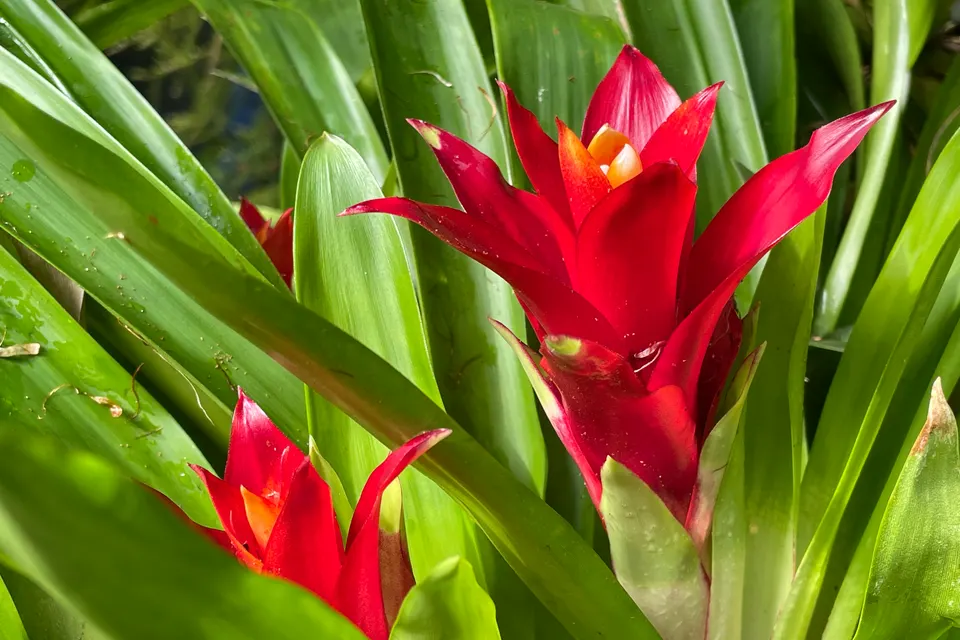
Guzmania lingulata, also called Scarlet star, Guzmania
- Light
- Low light to medium light. Best spot: an east window, or a few feet back from a south or west one.
- Water
- Water when the top of the mix is dry
- Humidity
- Does better with extra humidity
- Potting mix
- A chunky bark or orchid/violet mix, not regular potting soil
- Pets
- Non-toxic (ASPCA)
How to care for a bromeliad
The common bromeliad with a rosette of green leaves and a red or orange flower spike that lasts 2 to 4 months. It does well in part to full shade and under artificial light. Pot it in a bromeliad or orchid mix that lets air reach the roots, water the soil sparingly, and keep water in the cup at the center of the rosette, especially in summer. A humidifier or pebble tray helps. After flowering the main plant slowly dies, but it leaves offshoots that grow into new plants.
Common problems
Leaf spots, scale, spider mites and mealybugs. The parent plant declining after it blooms is normal.
Questions people ask
How much light does a bromeliad need?
Low light to medium light. Best spot: an east window, or a few feet back from a south or west one.
How often should I water a bromeliad?
Water when the top of the mix is dry.
Is bromeliad toxic to cats and dogs?
No. Non-toxic to dogs, cats and horses (listed as Orange Star, Guzmania lingulata minor).
Sources
As an Amazon Associate we earn from qualifying purchases. Some links on this page also go to other retailers we may earn a commission from as an affiliate, at no extra cost to you. We only recommend products with a clear consensus of positive, independent reviews, or ones we bought and use ourselves. Each item on our gear page says which.