Bird's Nest Fern
Asplenium nidus
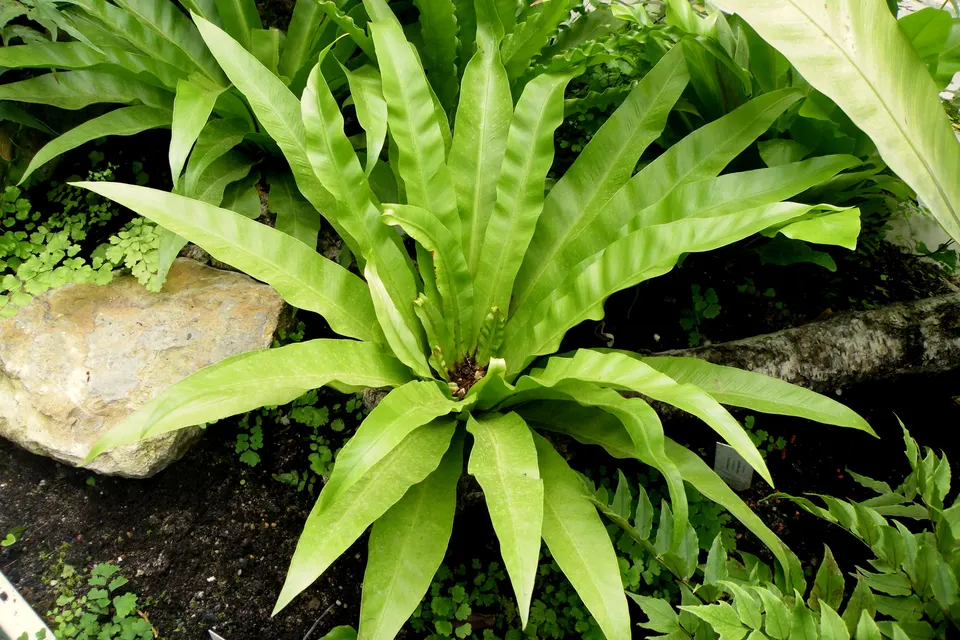
- Light
- Low light to medium light. Best spot: an east window, or a few feet back from a south or west one.
- Water
- Keep evenly moist, never soggy
- Humidity
- Does better with extra humidity
- Temperature
- Keep it above 60°F
- Potting mix
- An indoor potting mix with good drainage
- Pets
- Keep away from pets
How to care for a bird's nest fern
A rosette of wide, glossy, strap-shaped fronds with dark midribs, more like banana leaves than a typical fern. Bright light or light shade, such as a north window, suits it; too much sun yellows it or stops growth. Grow it in a rich, moist, porous mix such as a fern mix, and use a pebble tray if the air is dry. It does best at 60 to 70°F and won't survive below 40°F. Feed monthly with dilute fertilizer while it's actively growing.
Common problems
No serious problems, but the fronds are fragile, so handle them gently. Scale, mealybugs, bacterial leaf diseases and leaf nematodes; it is also sensitive to chemical insecticides. Keep it away from heat vents and drafts.
Questions people ask
How much light does a bird's nest fern need?
Low light to medium light. Best spot: an east window, or a few feet back from a south or west one.
How often should I water a bird's nest fern?
Keep evenly moist, never soggy.
Is bird's nest fern toxic to cats and dogs?
Treat it as unsafe. Not on the ASPCA list, and NC State gives no toxicity rating for it, so we have no source either way.
Sources
As an Amazon Associate we earn from qualifying purchases. Some links on this page also go to other retailers we may earn a commission from as an affiliate, at no extra cost to you. We only recommend products with a clear consensus of positive, independent reviews, or ones we bought and use ourselves. Each item on our gear page says which.