African Violet
Streptocarpus ionanthus, also called Saintpaulia
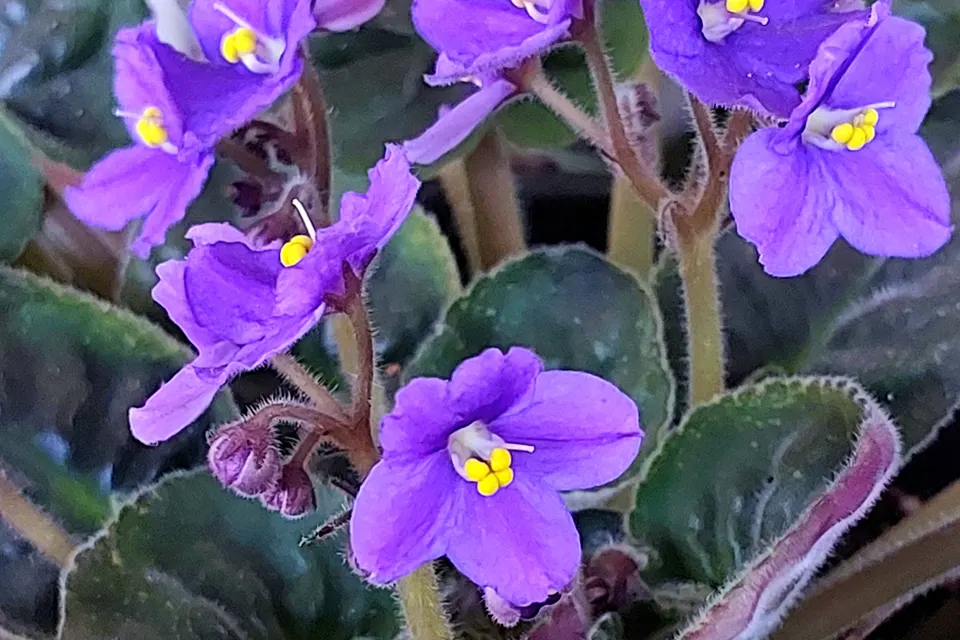
- Light
- Medium light to bright, indirect light. Best spot: close to a bright window but out of the sun's direct rays.
- Water
- Water when the top of the mix is dry
- Humidity
- Needs extra humidity
- Temperature
- Keep it above 60°F
- Potting mix
- A chunky bark or orchid/violet mix, not regular potting soil
- Pets
- Non-toxic (ASPCA)
How to care for an African violet
Bright, filtered light and a light, fast-draining mix: NC State suggests 2 to 3 parts peat moss or coir, 2 parts vermiculite and 1 part perlite, or an orchid/violet mix. Set the crown just above the soil. Water from the bottom to keep leaves dry, and let the surface dry before watering again. It thrives in high humidity and steady temperatures of 60 to 80°F; nights below 60°F stunt it. Pinch off dead leaves.
Common problems
Overwatering is the number one problem, leading to crown and root rot. Botrytis blight; vine weevil, thrips, mealybugs and cyclamen mites. Cold water and water on the leaves leave spots or rings.
Questions people ask
How much light does an African violet need?
Medium light to bright, indirect light. Best spot: close to a bright window but out of the sun's direct rays.
How often should I water an African violet?
Water when the top of the mix is dry.
Is African violet toxic to cats and dogs?
No. Non-toxic to dogs, cats and horses (listed as Saintpaulia).
Sources
- NC State Extension Plant Toolbox: Streptocarpus ionanthus
- ASPCA Animal Poison Control: African Violet
As an Amazon Associate we earn from qualifying purchases. Some links on this page also go to other retailers we may earn a commission from as an affiliate, at no extra cost to you. We only recommend products with a clear consensus of positive, independent reviews, or ones we bought and use ourselves. Each item on our gear page says which.